- •ISO form CP 00 30 pays the net income and continuing expenses, including payroll, you would have earned but for the loss.
- •Coverage runs a "period of restoration": it begins 72 hours after the loss and ends when the property should be repaired with reasonable speed. The end date is the fight.
- •Civil-authority coverage can pay with no damage to your building, but only if an order responds to damage within one mile, and it caps at four weeks.
- •Dependent-property coverage (CP 15 08 / 09) extends it to a key supplier or customer the storm shut down.
- •The whole claim turns on documentation: financials, tax returns, and a but-for projection the carrier’s accountant will attack.
What business income covers
A commercial hurricane causes two separate losses. The first is physical: the roof, the equipment, the inventory, paid on the property side of the policy. The second is the income the business stops earning while it is closed, and that is what business-income coverage insures. On the standard ISO CP 00 30 (Business Income and Extra Expense Coverage Form), the trigger is the same one that opens the property claim: a Covered Cause of Loss must cause direct physical loss or damage to the described premises, forcing a suspension of operations.
What it pays is defined precisely. "Business income" is the net income (net profit or loss before income taxes) that the business would have earned, plus the normal operating expenses that continue during the period of restoration, including payroll. That last clause matters: coverage keeps the lights, the lease, and the staff funded through the shutdown, not just the lost profit. A Causes of Loss form, CP 10 30 (Special), CP 10 20 (Broad), or CP 10 10 (Basic), has to be attached to say which perils count; hurricane wind is a covered cause under all three.
Extra expense
The "and Extra Expense" in the form title is a second, distinct coverage, and one businesses under-use. Extra expense pays the necessary costs you incur to keep operating, or to speed the restoration, that you would not have incurred had there been no loss. Renting a temporary location, leasing replacement equipment, expediting repairs, paying overtime to reopen faster: all extra expense. Extra expense coverage has no 72-hour waiting period; it begins immediately at the time of loss.
The two coverages work together. Money spent on extra expense often reduces the business-income loss: a temporary storefront that keeps revenue flowing shrinks the income claim. Well-run claims spend on extra expense to cut the larger loss, and the policy rewards that.
The restoration clock
Business-income coverage does not run forever. It runs for the period of restoration, a window the form defines at both ends, and the single most litigated element of a BI claim. It begins 72 hours after the direct physical loss and ends on the earlier of the date the property should be repaired, rebuilt, or replaced with reasonable speed and similar quality, or the date the business resumes at a new permanent location.
Where the business-income clock starts and stops
Coverage lives inside the shaded window. The 72-hour waiting period at the front is absorbed by the business; the end date is where the carrier and the policyholder fight over how fast repairs "should" have gone.
The carrier shrinks the claim by arguing repairs "should" have finished earlier. The counter is documented reality: permit dates, contractor bids, and material lead times after a regional catastrophe.
PERIOD OF RESTORATION PER ISO CP 00 30 10 12 · POLICY EDITION CONTROLS
The phrase "with reasonable speed" decides the end date. The carrier measures it against an idealized repair schedule; the policyholder measures it against the real world after a hurricane, where permits back up, licensed contractors are booked for months, and manufacturers ration materials across an entire damaged region. Every one of those delays outside the business’s control extends the honest period of restoration. Each has to be documented as it happens, not reconstructed later.
The 72-hour waiting period
The standard CP 00 30 builds a 72-hour waiting period into business-income coverage: nothing is payable for income lost in the first 72 hours after the direct physical loss. It works as a time deductible, and it applies only to the business-income side; extra expense begins immediately. For a business closed for weeks, three days is minor; for a short closure, it can erase the whole claim. Some commercial policies buy the waiting period down to 24 hours, or out entirely, by endorsement, a line worth checking on the declarations before the season, not after.
ISO CP 00 30 · PERIOD OF RESTORATION, "BEGINNING" (TYPICAL WORDING)"Period of Restoration means the period of time that: Begins … 72 hours after the time of direct physical loss or damage for Business Income Coverage … and Ends on the earlier of: the date when the property … should be repaired, rebuilt or replaced with reasonable speed and similar quality; or the date when business is resumed at a new permanent location."
Civil-authority orders
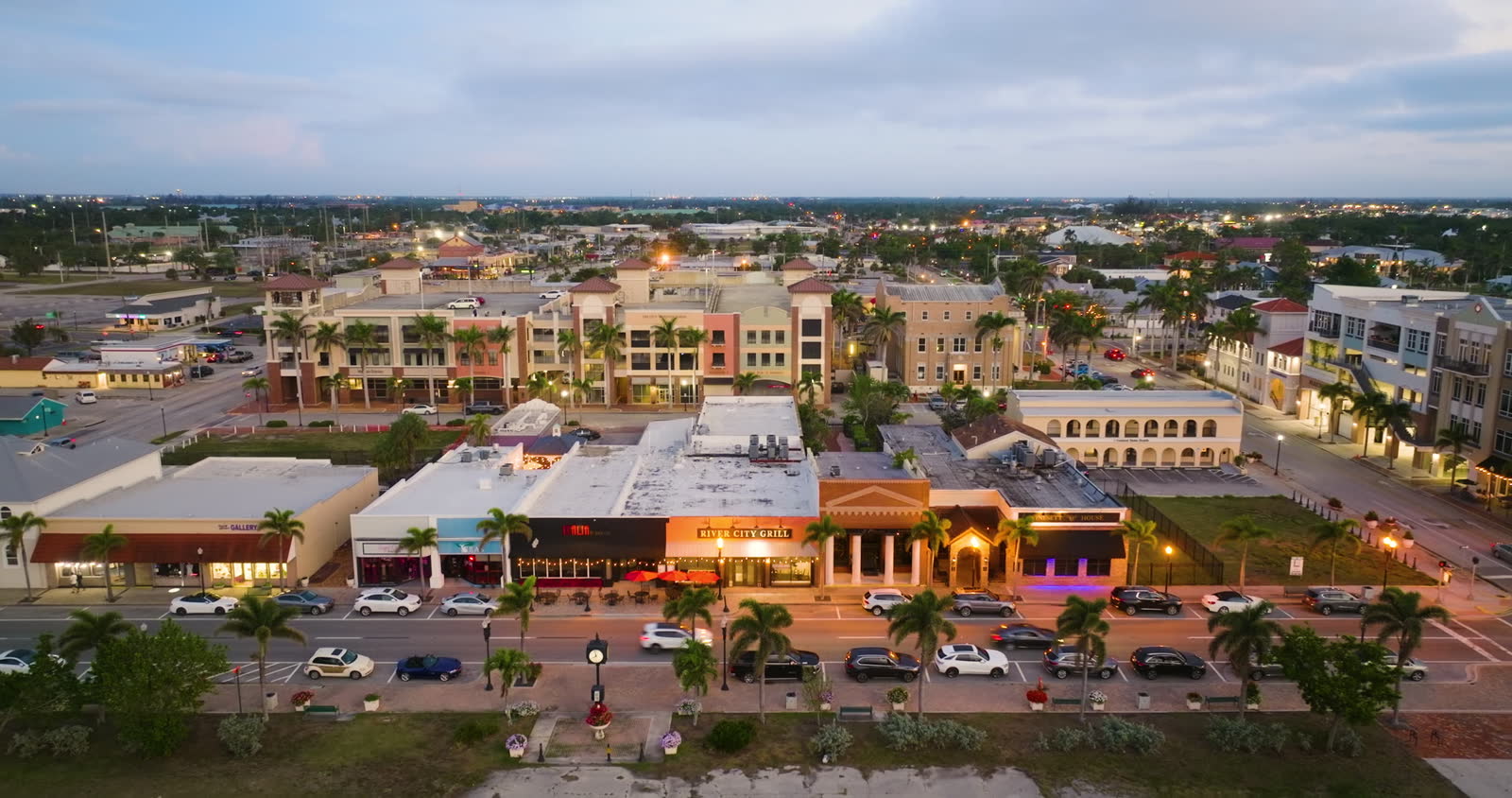
The most valuable and most contested extension of business-income coverage pays when your building is fine but the government closes the area around it. Under the standard CP 00 30 civil-authority grant, coverage applies when a Covered Cause of Loss damages property other than your premises, a civil authority prohibits access to the area as a result, and your premises sit within that area but not more than one mile from the damaged property. Coverage begins 72 hours after the order and runs for up to four consecutive weeks.
The courts police the trigger tightly, and the recurring loss is the same: an order issued in anticipation of a storm, before any property is damaged, does not qualify. In Dickie Brennan & Co. v. Lexington Insurance Co. (5th Cir. 2011), a New Orleans restaurant’s claim for a pre-Gustav mandatory evacuation failed because the order was precautionary; it lacked the required nexus to prior damage to nearby property. In Southern Hospitality, Inc. v. Zurich American Insurance Co. (10th Cir. 2004), the post-9/11 FAA ground-stop failed the same test: it was a national response to a feared future risk, not an order caused by physical damage to neighboring property. The lesson for a hurricane file: the winning civil-authority claim ties the closure order to actual, documented damage to identifiable property within a mile, not to the evacuation that came before the wind.
Ingress / egress
Civil-authority coverage turns on a government order. Ingress/egress coverage turns on a physical fact: you cannot get to or from your premises because roads are blocked, bridges are out, or debris makes access impossible, whether or not any authority has ordered anything. After a hurricane the two frequently overlap, but they are separate grants proven by separate evidence, and the distinction decides claims.
The catch: ingress/egress is not part of the standard ISO CP 00 30. It appears in manuscript commercial forms and in the named-storm endorsements common on coastal policies. If your business depends on a single causeway or a barrier-island road, whether you carry ingress/egress coverage, and what radius and waiting period it uses, is worth confirming line by line before the storm. Where a policy has both, a coordinated claim pleads civil authority and ingress/egress in the alternative, so a failure of the order’s nexus does not sink a loss the blocked road independently supports.
Dependent-property coverage
A hurricane can idle your business without touching your building, by destroying the supplier you depend on, or the customer who buys everything you make. Dependent-property coverage, also called contingent business interruption, is the ISO extension for exactly that: forms CP 15 08 (Broad) and CP 15 09 (Limited) extend business-income coverage to income you lose when a Covered Cause of Loss damages a scheduled dependent property rather than your own premises. The four categories:
- Contributing location: a property that supplies materials or services to you. Your key parts supplier, wiped out inland, stops your line on the coast.
- Recipient location: a property that buys your products or services. Your single largest customer floods and stops ordering.
- Manufacturing location: a property that makes your products for delivery to your customers under contract.
- Leader location: a property that draws customers to you: the anchor store or attraction whose closure empties your parking lot.
The coverage only works if you scheduled the dependent property and a Covered Cause of Loss damaged it. The Broad Form (CP 15 08) makes the full business-income limit available to a dependent-property loss; the Limited Form (CP 15 09) requires a separate scheduled limit. For any business with a concentrated supply chain or a single dominant customer in hurricane country, it is the coverage that turns "someone else’s storm" into a payable loss.
The documentation battle
This is where business-income claims are won or lost. Unlike a roof, a business-income loss has no physical evidence; it is a but-for projection: what the business would have earned had the storm never happened, net of expenses that did not continue during the shutdown. Every dollar of that projection is an argument, and the carrier retains its own forensic accountant to attack it.
The proof stack that survives that attack, in order of weight:
- Historical financials: profit-and-loss statements and general ledgers, ideally three years, showing the seasonal shape of the business the projection has to match.
- Federal and state tax returns: the hardest number to argue with, because the business already swore to it.
- Point-of-sale and sales records: daily and weekly revenue that lets the projection track the actual pre-storm trend, not just an annual average.
- The but-for model: a forensic accountant’s projection of the restoration-period revenue, net of non-continuing expenses like cost of goods not purchased.
- Contemporaneous delay records: the permits, bids, and lead-time emails that justify the length of the period of restoration.
Two obligations sit behind all of it. The policy requires you to produce your books and cooperate; stonewalling the carrier’s document requests can jeopardize the claim outright. In Florida the notice deadlines still apply: a claim must be filed within the § 627.70132 windows, and the carrier owes a pay-or-deny decision under § 627.70131. The cleaner and more contemporaneous the records, the less room the carrier’s accountant has to move the number.
Florida vs. South Carolina
- Claim deadlines: 1 year to file, 18 months supplemental (§ 627.70132); carrier owes a pay-or-deny decision on the timeline in § 627.70131.
- Named-storm forms: commercial coastal policies often add ingress/egress and named-storm business-income terms not found in the base CP 00 30.
- Prompt-pay backdrop: claims-handling and interest provisions apply to the business-income payment, not just the property side.
- Appraisal: the amount of a business-income loss can be pushed to appraisal under the policy’s conditions when value, not coverage, is the dispute.
- Claim deadlines: "prompt" notice per policy; 3-year contract suit period; no § 627.70132 equivalent.
- Bad-faith backdrop: the improper-claims-practices statute (S.C. Code § 38-59-20) governs unreasonable handling of a business-income claim.
- Coastal forms: named-storm and ingress/egress endorsements are common on Beach Area commercial policies; read the schedule.
- Same ISO core: CP 00 30, the 72-hour period, the one-mile civil-authority rule, and dependent-property forms apply the same way; the differences are procedural.
ISO form summaries and case holdings are summarized as of July 2026, and policy editions differ. Confirm the edition date and exact wording on your own CP 00 30 and any named-storm endorsement before relying on it.
Business-interruption claims: the questions owners ask
What does business interruption insurance actually cover after a hurricane?
On the standard ISO form CP 00 30 (Business Income and Extra Expense Coverage Form), business income coverage pays the net income (net profit or loss before taxes) that the business would have earned, plus normal operating expenses that continue during the shutdown, including payroll. It applies when a Covered Cause of Loss causes direct physical loss or damage to the described premises and the business has to suspend operations. It does not pay for the physical damage itself; that is the property side of the policy. It stops when the property should be repaired with reasonable speed.
What is the “period of restoration” and why do carriers fight over it?
The period of restoration is the window business-income coverage runs. Under CP 00 30, it begins 72 hours after the direct physical loss for business income coverage (immediately for extra expense) and ends on the earlier of the date the property should be repaired, rebuilt, or replaced with reasonable speed and similar quality, or the date the business resumes at a new permanent location. The fight is almost always over the end date: the carrier argues repairs should have moved faster, shrinking the period; the policyholder documents the real-world constraints (permitting, contractor availability, material lead times after a regional catastrophe) that set the honest timeline.
My business had no physical damage but the city closed the area. Am I covered?
Possibly, through civil-authority coverage. The standard CP 00 30 grant applies when a Covered Cause of Loss damages property other than your premises, a civil authority prohibits access to the area as a result, and your premises are within that area but not more than one mile from the damaged property. Coverage begins 72 hours after the order and lasts up to four consecutive weeks. The critical limit, enforced by the courts, is the nexus: the order must be a response to actual physical damage to nearby property, not a precautionary pre-landfall evacuation.
Is there a waiting period before business-income coverage pays?
Yes. The standard CP 00 30 form builds in a 72-hour waiting period: business income coverage does not begin until 72 hours after the time of direct physical loss. The first three days of lost income are absorbed by the business; it functions as a time deductible. Extra expense coverage has no waiting period and begins immediately. Some policies buy the waiting period down by endorsement, so read the declarations.
What is the difference between civil authority and ingress/egress coverage?
Civil-authority coverage responds to a government order that prohibits access to your area because of damage to nearby property; the trigger is the order. Ingress/egress coverage responds when you physically cannot get to or from your premises because roads are blocked or impassable; the trigger is the physical obstruction, with or without any government order. Ingress/egress is not part of the standard ISO CP 00 30; it appears in manuscript and named-storm commercial forms. After a hurricane the two often overlap, but they are proven differently.
A hurricane shut down my main supplier, not my building. Can I claim that?
That is dependent-property, or contingent business-interruption, coverage, added by ISO forms CP 15 08 (Broad) or CP 15 09 (Limited). It extends business-income coverage to income you lost because direct physical loss damaged a dependent property rather than your own premises. The four scheduled categories are a contributing location (a key supplier), a recipient location (a key customer), a manufacturing location, and a leader location (an anchor that draws your customers). It only applies if you scheduled the dependent property and a Covered Cause of Loss damaged it.
How do I prove a business-income loss the carrier can’t just deny?
You build a but-for revenue model: what the business would have earned had the storm never hit, net of expenses that did not continue during the shutdown. The proof stack is historical profit-and-loss statements, general ledgers, federal and state tax returns, point-of-sale and sales records, and often a forensic accountant’s projection. The carrier will retain its own accountant to attack the projection, so the cleaner and more contemporaneous your records, the stronger the number. The policy also requires you to produce your books and cooperate; refusing can jeopardize the claim.
- ISO FORM ISO CP 00 30: Business Income (and Extra Expense) Coverage Form (10 12 edition, full text PDF) ↗
- ISO FORM ISO CP 15 08: Business Income From Dependent Properties (Broad Form) ↗
- US 5TH CIR. Dickie Brennan & Co. v. Lexington Ins. Co., 636 F.3d 683 (5th Cir. 2011): Hurricane Gustav civil-authority nexus ↗
- US 10TH CIR. Southern Hospitality, Inc. v. Zurich American Ins. Co., 393 F.3d 1137 (10th Cir. 2004): civil authority requires damage-caused order ↗
- FL LEGISLATURE Fla. Stat. § 627.70131: insurer duty to pay or deny / claims-handling timeline ↗
- FL LEGISLATURE Fla. Stat. § 627.70132: notice of property insurance claim (1 year / 18 months) ↗
- NOAA / NHC NHC Tropical Cyclone Report: Hurricane Ian (PDF) ↗
Not legal advice; consult an attorney about your specific claim.
Business income has a clock, and the carrier controls the estimate.
Business interruption coverage pays lost net income plus continuing operating expenses during the period of restoration. Commercial forms define that period as the time reasonably needed to repair or replace the damaged property. The dispute is rarely whether coverage exists; it is how long the period runs and what your income would have been. Carriers compress the timeline, question payroll you kept, and discount projected revenue. Most forms also impose a 72-hour waiting period, so the first three days come out of your pocket.
Recovery turns on records: profit-and-loss statements, filed tax returns, and 12 months of booking history set the baseline. A 30-day delay on an operation earning $40,000 in monthly net income is $40,000 gone before continuing costs. See how a restaurant documents a shutdown and how wind and hurricane damage supplies the physical-loss trigger the coverage depends on. No covered physical damage means no payment on most forms, and a denied or underpaid claim usually turns on that link or a shortened restoration period. Track the statutory deadlines, because delay can support a bad-faith claim, and a public adjuster can rebuild the income model. The free review below reads your restoration period, continuing costs, and the carrier's number.
Business-income claim lowballed, or the restoration period cut short?
Upload the policy, the carrier’s business-income calculation, and your financials. You'll get a straight read on the period of restoration, the civil-authority and dependent-property terms, and whether the carrier’s but-for number holds.

 HURRICANELAW.PRO
 A comprehensive property-insurance claim resource for policyholders: denied and underpaid claims, coverage and bad-faith law, storm dossiers, carrier profiles, city guides, and the complete claims playbook. Florida and South Carolina.
▸ SEE THE FULL SITE MAP →Coverage summaries, policy-language quotations, dollar figures, deadlines, and chart examples throughout this site are general information based on typical or standard policy forms and are illustrative only: they are not a quote, a guarantee of coverage, or a promise of any outcome. Every insurance policy is different: your own policy, endorsements, and state law control, so read your policy and confirm current statutes. Weather imagery courtesy of NOAA, the National Hurricane Center, and the National Weather Service. Legal services are provided by Halversen Law. Nothing on this site is legal advice; consult an attorney about your specific claim.
Legal matters are handled by Halversen Law, a law firm licensed in Florida and South Carolina.