
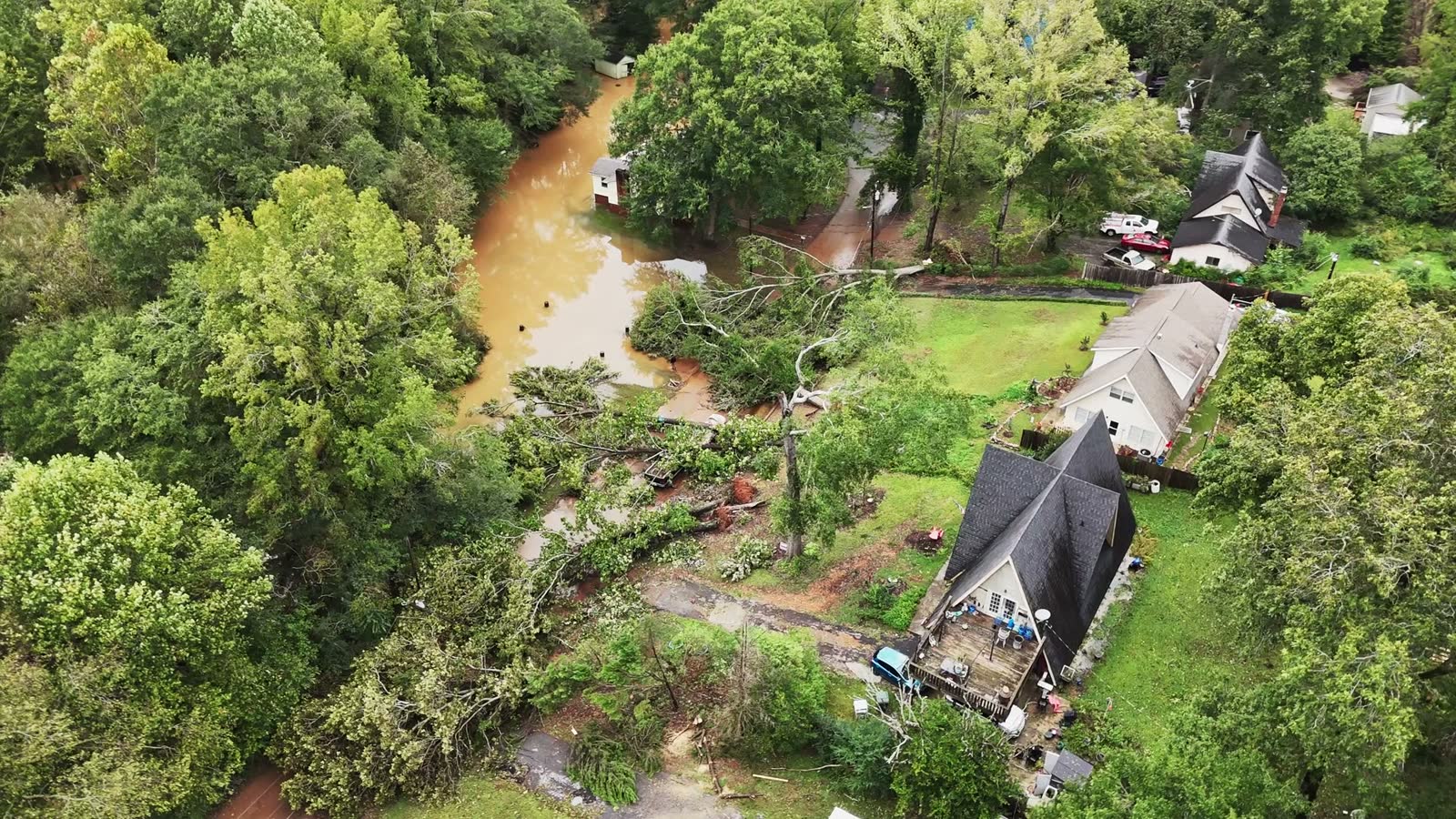
Does homeowners insurance cover flood damage?
No. Every standard homeowners policy excludes flood, and rising water is insured only by a separate policy, NFIP or private. NFIP caps building coverage at $250K and contents at $100K, with no additional living expenses. More than 40% of NFIP claims come from outside high-risk flood zones (FEMA).
| Homeowners policy | excludes flood |
|---|---|
| NFIP caps | $250K building, $100K contents (depreciated) |
| Living expenses | not covered by NFIP |
| Outside high-risk zones | 40%+ of NFIP claims (FEMA) |
| Lender requirement | mapped high-risk zones with a federally backed loan |
- •Every standard homeowners policy excludes flood. Rising water is insured only by a separate policy, NFIP or private.
- •NFIP caps: $250K building / $100K contents (depreciated). No additional living expenses. Federal deadlines. No bad-faith claims.
- •The map is not the risk: 40%+ of NFIP claims come from outside high-risk flood zones (FEMA).
- •Helene flooded counties where under 1% of households had flood coverage; ~80% of Harvey's flooded Houston homes were uninsured for it.
- •Lenders only require flood coverage in mapped high-risk zones with a federally backed loan, everyone else decides for themselves, usually badly.
Flood was never in the policy
The short answer is history. Flood is a concentrated peril, the same low-lying properties take water again and again, and by the mid-20th century private carriers had largely stopped writing it: a book of flood policies sells almost exclusively to the people most likely to collect. Congress filled the void in 1968 with the National Flood Insurance Program, a federal insurance program tied to community floodplain rules. From then on, the American system has had two policies for one house: homeowners for wind and fire, flood for rising water.
The homeowners side enforces the split with an exclusion written to catch every form of rising water:
STANDARD HOMEOWNERS WATER-DAMAGE EXCLUSION (ISO HO-3 FORM, TYPICAL WORDING)"Water Damage means: Flood, surface water, waves, including tidal wave and tsunami, tides, tidal water, overflow of any body of water, or spray from any of these, all whether or not driven by wind…"
Note what the exclusion sweeps in: river flooding, surge, ponding rain entering at ground level, tidal water, "whether or not driven by wind." (Storm surge fights, anti-concurrent-causation clauses, and the wind-vs-water allocation war are covered in surge vs. flood.) What it leaves covered: water from above (a storm-created roof opening) and water from within (plumbing, the sudden-water guide). The rule of thumb adjusters use: water that touched the ground before it touched your house is flood.
NFIP mechanics: caps, deadlines, and no bad faith
An NFIP policy is federal insurance sold through private "Write Your Own" carriers, and it behaves like nothing else in your insurance file. The essentials:
- Hard caps. $250,000 building / $100,000 contents, no endorsement raises them. Contents pay at depreciated actual cash value, not replacement cost.
- No ALE. Zero coverage for hotel, rent, or living expenses while your home is unlivable, the single most painful surprise in NFIP claims.
- Basement limits. Below-grade spaces get sharply limited coverage, structural elements and essential equipment, not finished spaces or contents.
- ICC money. Up to $30,000 of Increased Cost of Compliance coverage when code requires elevation, floodproofing, or demolition after a qualifying loss.
- The 60-day sworn proof of loss. A signed, sworn accounting of the claim within 60 days of the loss, not the adjuster's estimate, your document. FEMA extends it after some major storms (it did for Helene and Milton), but unfiled and late proofs of loss have voided more flood claims than any adjuster dispute. After Sandy they defeated otherwise valid claims wholesale.
- Federal appeal and suit clock. FEMA appeal within 60 days of a written denial; suit in federal district court within one year of the first written denial. State limitation periods do not apply.
- No bad faith. Federal law preempts state bad-faith and unfair-claims remedies. There is no punitive leverage against an NFIP carrier, the claim is won on documentation or not at all.
The program's finances explain its rigidity: Katrina alone drew $16.3 billion from the fund, and the NFIP has carried multibillion-dollar debt to the Treasury ever since, reauthorized by Congress in short extensions, repriced under Risk Rating 2.0, perpetually litigated and perpetually essential.
Caps vs. reality: what each recovery path actually pays
Line up the recovery paths against what rebuilding actually costs and the flood system's shape gets clear: FEMA grants are triage, NFIP payouts are substantial but capped, and everything above $250,000 is either private coverage you bought in advance, or your own money.
What each flood-recovery path actually pays
FEMA grants are triage, NFIP payouts are substantial but capped, nothing federal pays above the $250,000 line.
Above $250,000, or with no flood policy at all, recovery means private or excess flood coverage bought in advance, SBA disaster loans (repaid), or savings. FEMA grants are aid, not insurance: the 2019-23 average ran 16 times below the average NFIP payout.
SOURCES: FEMA / FLOODSMART "RECOVERING FINANCIALLY AFTER A FLOOD" (2019-2023 AVERAGES) · TEXAS FLOOD / TDI HARVEY RECOVERY DATA · FEMA NFIP CLAIMS HANDBOOK (CAPS)
Read the Harvey bar twice: flood-insured Houston households averaged about $118,000 in NFIP payouts, while their uninsured neighbors averaged roughly $4,400 in FEMA assistance, a 27-fold difference decided entirely by a purchase made before the rain. The caps matter; the gap between insured and uninsured matters far more.
The flood-zone myths
Most uninsured flood losses trace to one belief: "I'm not in a flood zone." Three corrections:
- Everyone is in a flood zone. FEMA maps assign every parcel a zone; "not in a flood zone" means Zone X, moderate-to-minimal mapped risk, not no risk. The A and V zones (the Special Flood Hazard Area) are where the 1%-annual-chance line falls, nothing more.
- The claims don't respect the line. Per FEMA, more than 40% of NFIP flood claims come from properties outside high-risk zones. The maps model riverine and coastal base floods, not the rain-driven, drainage-overwhelmed flooding that puts water in X-zone streets, and not storms that exceed the modeled event.
- Maps age; storms don't check them. Map revisions lag development, drainage changes, and climate-shifted rainfall by years. Helene put record water through mountain valleys mapped generations ago; Houston's X zones flooded by the tens of thousands under Harvey's 40 inches of rain.
The inversion is what makes the myth expensive: X-zone premiums are comparatively cheap because the mapped risk is lower, while the mandate-free zone is exactly where nobody buys the policy. The result, storm after storm: the high-risk zone is insured and the moderate-risk zone is ruined. Check your own address with our storm history lookup, then price the policy before the season peaks.
Helene: the uninsured-flood catastrophe
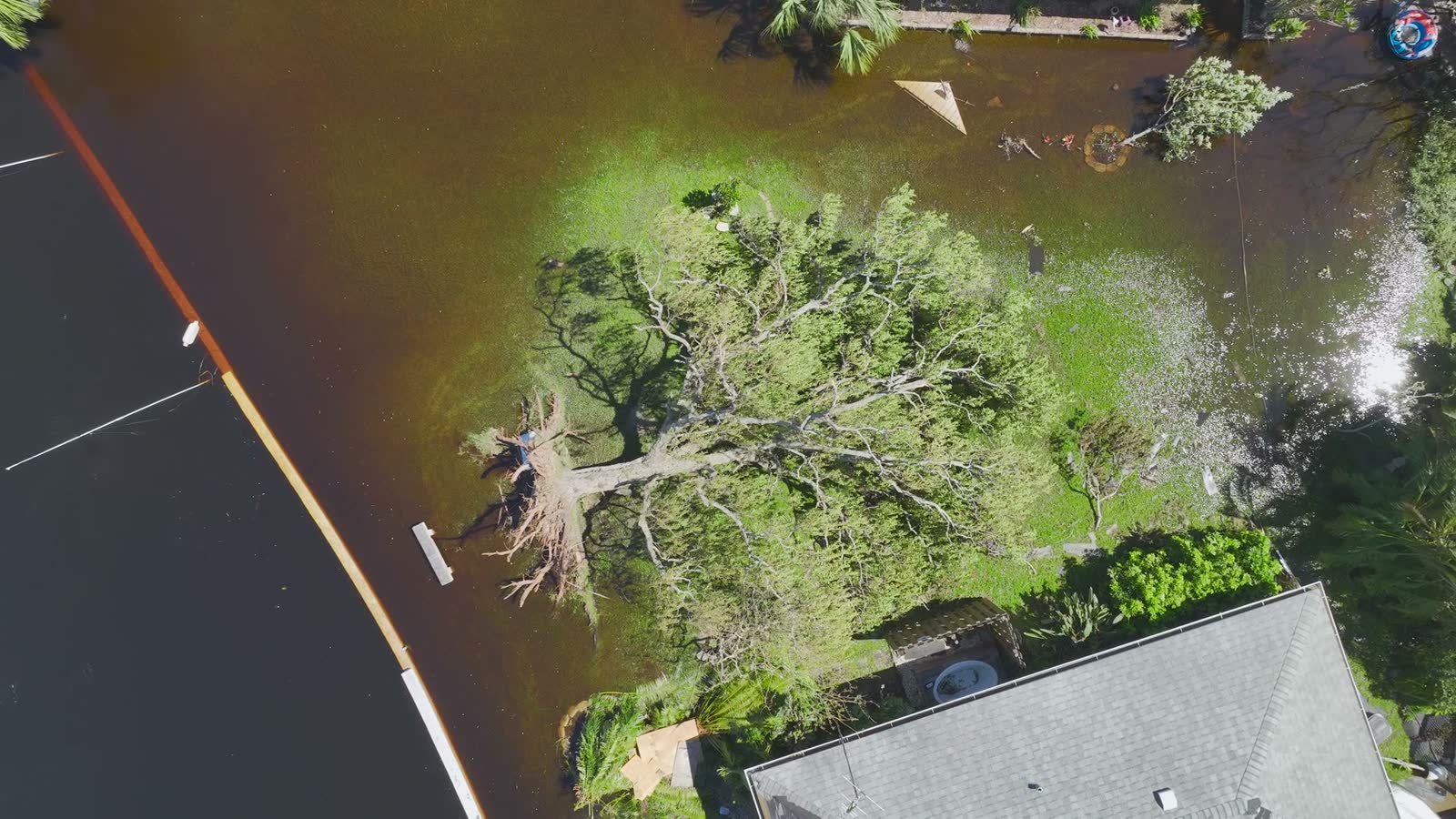
Helene was the flood-gap thesis executed at regional scale. On the Florida coast, record surge, 15 feet in the Big Bend, the worst Tampa Bay surge in a century, hit neighborhoods where the flood policy was the exception. FLOIR's November 2024 data: 42% of 329,000+ residential claims across Helene and Milton closed without payment, with uncovered flood damage a leading cited reason. Private flood carriers paid $197 million across both storms, real money, microscopic against the loss.
Inland was starker. Helene's rain, over 30 inches in the North Carolina mountains, flooded valleys hundreds of miles from any coast. In Buncombe County (Asheville), under 1% of households carried NFIP coverage per Swiss Re data. In upstate South Carolina, NFIP paid just $9.72 million on 368+ claims statewide, while FEMA Individual Assistance, over $323 million across 28 SC counties, became the fallback, in grants averaging a fraction of any rebuild. North Carolina's $59.6 billion in damage was overwhelmingly uninsured flood loss. No zone map had told those households they needed the second policy; the rain didn't consult it.
Harvey and the 2015 SC floods: the gap, twice before
Harvey, 2017 remains the benchmark uninsured-flood disaster. The overwhelming majority of its $125 billion in damage was freshwater flood; roughly 80% of flooded Harris County homes carried no flood insurance. The Texas Department of Insurance's final data call recorded the consequence in one number: of 261,860 homeowners claims filed, 63% closed without payment, overwhelmingly because the damage was flood and the homeowners policy never covered it. Flood-insured households recovered an average $118,000 through the NFIP; uninsured neighbors averaged $4,400 in FEMA aid.
The 2015 South Carolina floods previewed the inland version a decade early. A 1,000-year rain event, 26.88 inches at Mount Pleasant, dams failing in sequence down the Gills Creek chain, flooded the Midlands and Lowcountry while Hurricane Joaquin stayed hundreds of miles offshore. NFIP take-up in the flooded counties was in the single digits. South Carolina's costliest flood hit almost entirely uninsured households, the same arithmetic Helene ran again in 2024, one state north.
Lender requirements: the only mandate there is
Federal law (42 U.S.C. § 4012a) requires flood insurance in exactly one situation: a structure in a mapped Special Flood Hazard Area (an A or V zone) securing a loan from a federally regulated or federally backed lender. The required amount is the lesser of the outstanding loan balance, the NFIP maximum ($250,000), or the insurable value, protecting the lender's collateral, which is why loan-balance coverage can still leave the owner badly underinsured. Let the policy lapse and the lender force-places coverage: costlier, and protecting the bank, not your contents.
Everyone outside that triangle, X-zone owners, paid-off homes, seller-financed and cash purchases, faces no requirement at all. That is the gap's legal architecture: the mandate tracks the map and the mortgage, the water tracks neither. The NFIP's 30-day waiting period closes the last exit: you cannot buy the policy when the cone appears. The decision is made in the off-season or not at all.
The private flood market
The NFIP's caps and gaps created a market, and Florida leads it. Under Fla. Stat. § 627.715, Florida built an express regulatory lane for private flood insurance, and dozens of admitted and surplus-lines carriers now write it, as primary coverage competing with the NFIP, or as excess layered above the $250,000 cap. What private policies can offer that the NFIP cannot:
The trade runs both directions: private policies buy you higher limits, ALE, replacement-cost contents, and state-law remedies when the carrier misbehaves, the federal program buys you a counterparty that cannot leave the state after a bad season. Mortgage rules accept qualifying private policies in place of NFIP coverage. For coastal Florida and Lowcountry South Carolina homes worth more than $250,000, the practical answer is often both: NFIP or private primary, excess above it.
Florida vs. South Carolina
- Exposure: the nation's largest NFIP book, more policies in force than any other state, and still chronic under-insurance inland, as Helene's Big Bend and Tampa Bay losses showed.
- Private market: national leader under § 627.715; a mature admitted and surplus-lines market for primary and excess flood.
- After a storm: FLOIR emergency orders can suspend cancellations and extend homeowners-claim deadlines, but NFIP deadlines are federal and move only when FEMA says so.
- The two-policy fight: surge-vs-wind allocation runs through Florida case law (Sebo, the Ian verdicts), see surge vs. flood.
- Exposure: coastal take-up is decent; inland take-up is minimal, single digits in the 2015 flood's declared counties, and Helene's upstate flooding repeated the pattern.
- Private market: growing surplus-lines and admitted options, thinner than Florida's; excess-over-NFIP is the common structure on high-value coastal homes.
- After a storm: SC DOI consumer complaint and the improper-claims-practices law (S.C. Code § 38-59-20) govern homeowners and private-flood conduct, never NFIP claims.
- The inland lesson: 2015 and Helene both put SC's worst flood losses far from the beach, the mandate-free zone, twice.
Program rules and deadlines shown are general as of July 2026; FEMA bulletins can modify NFIP deadlines storm-by-storm. NFIP rules are federal and identical in both states. Verify against your policy, current statute, and current FEMA guidance.
Denial documents that cite the flood exclusion
- DENIAL LETTERFlorida Peninsula: the Milton claim closed on the flood exclusion, one page
- NEWS REPORTCitizens: the Helene surge denial its own engineer contradicted
- LETTER QUOTED IN A DFS FILINGHomeowners Choice: the anti-concurrent causation clause, quoted at a Fort Myers Beach loss
- LETTER QUOTED IN A DFS FILINGNational Fire & Marine: the damage attributed to flood, on a policy with no flood coverage
- LETTER QUOTED IN A DFS FILINGEdison: below the deductible, and the flood-damaged items excluded as well
- DENIAL LETTERScottsdale: Hurricane Ian damage denied twice over, water by the form and wind by endorsement
Flood coverage, the questions everyone asks
Why doesn't homeowners insurance cover flood?
Flood risk is concentrated, the same properties flood repeatedly, so private homeowners carriers largely abandoned the peril decades ago, and Congress created the National Flood Insurance Program in 1968 to fill the void. Every standard homeowners form since excludes "flood, surface water, waves... tidal water, overflow of any body of water," whether or not driven by wind. Rising water is insured only by a separate flood policy: NFIP or private.
What exactly does an NFIP policy cover, and not cover?
NFIP dwelling coverage caps at $250,000 and contents at $100,000 (contents paid at depreciated actual cash value). It pays nothing for additional living expenses while you are displaced, limits coverage in basements and crawl spaces, and adds up to $30,000 of Increased Cost of Compliance money for code-required elevation or demolition. Losses above the caps fall to any excess/private flood policy you bought, or to FEMA grants and SBA loans.
What are the NFIP deadlines if I flood?
Federal and unforgiving: a signed, sworn proof of loss within 60 days of the loss (FEMA has extended this after major storms, including Helene and Milton); a FEMA appeal within 60 days of a written denial; and suit in federal district court within one year of the first written denial. State deadlines do not apply, and courts enforce the federal ones strictly.
Can I sue an NFIP carrier for bad faith?
No. NFIP claims are governed by federal law, which preempts state bad-faith and unfair-claims statutes, even when the policy is serviced by a private "Write Your Own" insurer. Recovery is limited to the policy amount owed; there is no extra-contractual leverage. The claim is won on documentation: the sworn proof of loss, itemized inventories, photos, and adjuster-file challenges. Private flood policies, by contrast, remain subject to ordinary state insurance law.
I'm in an X zone. My lender doesn't require flood insurance. Am I safe?
The map says your risk is moderate. It does not say zero. Per FEMA, more than 40% of NFIP flood claims come from properties outside high-risk (SFHA) zones. Zone X means no federal purchase mandate and cheaper premiums; it does not mean the water checks the map. Helene's worst flooding hit inland counties where under 1% of households carried flood coverage.
Is there a waiting period to buy flood insurance?
Yes, NFIP policies generally take effect 30 days after purchase, precisely so homeowners cannot buy coverage as a storm approaches. Key exceptions: coverage bought in connection with a loan closing is effective immediately, and map-revision purchases get a shortened wait. Private flood carriers set their own waiting periods, often 10-14 days. The practical rule: the day to buy flood insurance is any day there is nothing on the map.
The storm brought both wind and flood damage. Who pays what?
Your homeowners policy owes for wind damage; your flood policy owes for rising water; and the allocation between them is the most litigated question in hurricane insurance, anti-concurrent-causation clauses, slab cases, and the Katrina-to-Ian case law. That war has its own guide: Storm surge or flood, who pays for the water?
- FEMA NFIP Claims Handbook (PDF) ↗
- FEMA / FLOODSMART Recovering Financially After a Flood, NFIP vs. disaster assistance (PDF) ↗
- FEMA / FLOODSMART Appeal an NFIP flood claim ↗
- CRS / CONGRESS.GOV A Brief Introduction to the National Flood Insurance Program ↗
- US CODE / LII 42 U.S.C. § 4012a, mandatory flood insurance purchase requirement ↗
- TEXAS FLOOD / TDI Harvey recovery: average NFIP payout vs. average FEMA grant ↗
- TEXAS DEPT. OF INSURANCE TDI final Hurricane Harvey data call (PDF) ↗
- NBC NEWS / SWISS RE Flood insurance coverage in counties hit by Hurricane Helene (map) ↗
- NOAA / NHC NHC Tropical Cyclone Report, Hurricane Helene (PDF) ↗
- FLOIR FLOIR Hurricane Helene claims data ↗
- FL LEGISLATURE Fla. Stat. § 627.715, private flood insurance authorization ↗
- NWS COLUMBIA NWS Columbia, the historic flooding of October 1-5, 2015 ↗
Not legal advice; consult an attorney about your specific claim. FLOIR and TDI statistics as reported in the agencies' catastrophe data releases.
Flood water and wind water are two different claims.
A flood claim is decided by the source of the water, not the depth. A homeowners policy covers wind-driven rain through a wind-created opening; it excludes surface water that rises from the ground. That distinction, surge versus flood, routes your loss to your carrier or to the NFIP, which pay on different rules and limits. Flood coverage is federal, sold through the National Flood Insurance Program, and identical in both states. A standard NFIP policy caps building coverage at $250,000 and contents at $100,000, pays actual cash value on contents, and covers almost nothing below the lowest elevated floor.
Documentation is the case. Photograph the high-water line on every wall before you pull drywall, record depth and date, and keep every receipt. NFIP claims run on a signed, sworn Proof of Loss due 60 days from the date of loss unless FEMA extends it; miss it and the file closes. Coastal losses follow the storm-surge rules; document them with the flood photo protocol and use the weather center for the rainfall and surge data that dates your loss. If you have NFIP coverage, the fight is usually scope and valuation; if you have only homeowners, the fight is causation, proving wind, not rising water, moved the loss. A public adjuster can rebuild the estimate, and Increased Cost of Compliance can add up to $30,000 to meet current code. If your Proof of Loss was underpaid or your surge claim denied, the free review below reads the file and tells you the next move.
Flood claim shorted, or denied as "flood" on your wind policy?
NFIP underpayments turn on the proof of loss; wind-policy denials turn on causation. Upload the denial or the adjuster's estimate and your photos. You'll get a straight answer on which fight you're in, what the federal deadlines leave open, and what the claim may still be worth.