
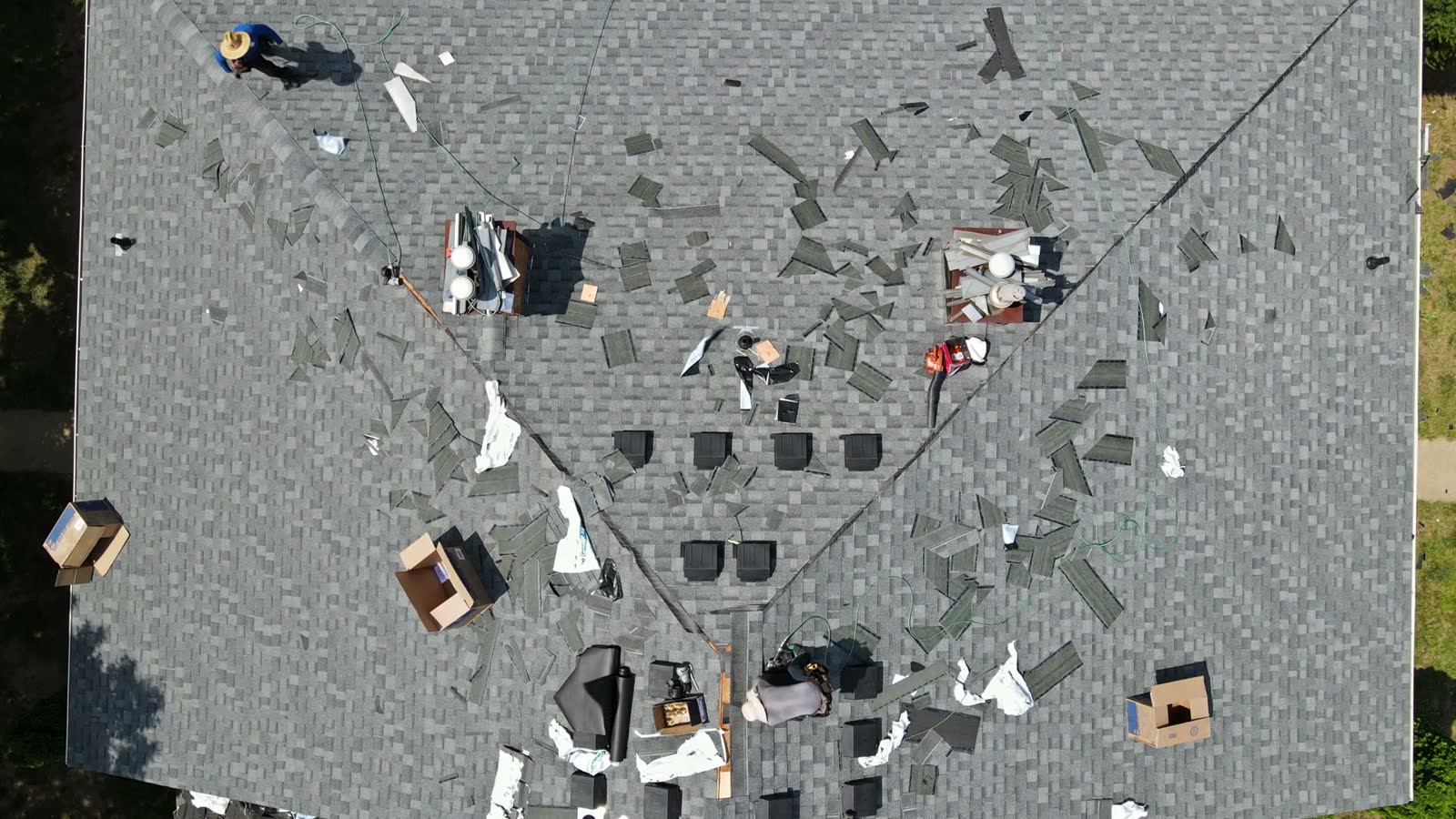
How do you check a contractor's license after a hurricane?
Roof work in Florida needs a Certified Roofing Contractor, statewide, or a Registered one for local jurisdictions; verify at MyFloridaLicense.com. In South Carolina, residential roofing runs through the Residential Builders Commission under LLR. Get the license number, confirm it is active for the right trade, and never pay in full up front.
| Florida roofing license | Certified (statewide) or Registered (local); MyFloridaLicense.com |
|---|---|
| South Carolina | Residential Builders Commission, SC LLR lookup |
| AOB | hands claim rights to the contractor; Florida sharply restricted new AOBs |
| Never | pay in full up front or sign a blank scope |
HIRE A CONTRACTOR WITHOUT GETTING BURNED
- •Roof work in Florida needs a Certified Roofing Contractor (statewide) or a Registered one (local jurisdictions only). Verify at MyFloridaLicense.com.
- •South Carolina residential roofing runs through the Residential Builders Commission under LLR. Verify at the SC LLR license lookup.
- •An assignment of benefits (AOB) hands your claim rights to the contractor; Florida has sharply restricted new AOBs and you should read any such form carefully.
- •Never pay in full up front, never let a contractor "handle the whole claim," and never sign a blank scope.
- •Get the license number, confirm it is active for the right trade and jurisdiction, and keep the contract in writing.
Which license you need, by state
A contractor without the right license class for your trade and jurisdiction is a problem before the first shingle goes on. Florida and South Carolina license roofing differently. Match the license to the work. For a roof job, the full checklist is how to vet a roofer before you sign.
Licensed by the state Construction Industry Licensing Board, valid statewide for roofing work.
Registered only in the specific local jurisdictions that recognize it, not automatically valid statewide.
DBPR license search at MyFloridaLicense.com. Confirm status is "Current, Active" and the trade matches the work.
For structural repairs beyond roofing; confirm the license class covers the scope of your job.
Licensed by the SC Residential Builders Commission (RBC) under LLR to build or supervise residential construction.
RBC license for a specific trade such as roofing, the category most storm roof jobs fall under.
Larger commercial work runs through the separate SC Contractor’s Licensing Board, search the correct system.
SC LLR license lookup, search by license number, business name, or individual name.
Florida contractor licensing: DBPR / Construction Industry Licensing Board. South Carolina residential roofing: Residential Builders Commission under LLR; commercial work via the SC Contractor’s Licensing Board. Confirm the current license class for your job.
- •Florida: DBPR contractor license search: myfloridalicense.com
- •South Carolina: LLR license lookup: verify.llronline.com · Residential Builders Commission: llr.sc.gov/res
- •FORTIFIED: IBHS FORTIFIED program and evaluator directory: fortifiedhome.org
Read before you sign your claim away
An assignment of benefits (AOB) is a document that transfers your right to collect insurance money to the contractor. Instead of the carrier paying you, the contractor bills the carrier directly and, in the worst cases, sues it over work you never fully controlled. AOB abuse drove years of roofing litigation in Florida.
Florida has since sharply restricted new AOB agreements in its property-insurance reforms. Do not sign an AOB just to get a tarp on the roof. Read exactly what rights you are transferring, keep your own claim contacts, and get a second read if a contractor insists on it.
"The insured hereby assigns any and all insurance rights, benefits, and proceeds under the above-referenced policy to the contractor." That is the sentence that hands over your claim. Know what it means before your signature goes under it.
Six reasons to walk away
Door-knocking right after the storm
Unsolicited crews going street to street, pressuring you to sign today, are the classic storm-chaser pattern.
Wants full payment up front
A reasonable deposit is normal; demanding the whole amount before work starts is a walk-away signal.
"We’ll handle the whole claim"
A contractor is not your adjuster or attorney. Anyone who wants to control your claim and payout should raise a flag.
No local address or license number
No verifiable license, no physical office, only a cell phone. You have nothing to enforce a warranty against.
Offers to "waive your deductible"
In many cases this is insurance fraud, and it tells you how this contractor does business.
Blank or vague scope of work
Never sign a contract that does not spell out exactly what will be done, with what materials, for what price.
A city-mapped roster of licensed contractors is being built from the official state rolls. Until it publishes, this page is a how-to, not a listing. HurricaneLaw.pro does not vet, rank, or recommend individual contractors. Verify any contractor yourself against the state lookups above.
Contractors, FAQ
How do I check a roofing contractor’s license in Florida?
Search the Florida DBPR license database at MyFloridaLicense.com by name or license number. For roofing you generally want a Certified Roofing Contractor (statewide) or a Registered Roofing Contractor valid in your local jurisdiction, showing a "Current, Active" status.
How do I check a contractor in South Carolina?
Residential roofing and building work is licensed by the SC Residential Builders Commission under LLR, use the SC LLR license lookup. Larger commercial work runs through the separate SC Contractor’s Licensing Board, so confirm you are searching the correct system for the type of contractor.
What is an assignment of benefits (AOB), and should I sign one?
An AOB transfers your right to collect insurance benefits to the contractor, who then deals with the carrier directly. Florida has significantly restricted new AOB agreements in recent reforms. Read any AOB form carefully, understand you may be giving up control of your claim, and consider a review before signing.
What is a FORTIFIED roof?
FORTIFIED is a voluntary construction standard from the Insurance Institute for Business & Home Safety (IBHS) that strengthens roofs and homes against wind and water. A FORTIFIED-designated installation can qualify for mitigation credits with some carriers; ask for the FORTIFIED designation and the qualified evaluator’s documentation.
The contractor says the damage is worse than the carrier paid. Now what?
A legitimate, documented scope difference is common and worth pursuing. If the carrier underpaid or denied a covered loss, a free attorney case review can tell you whether the gap is a claim dispute worth escalating.
Not legal advice; consult an attorney about your specific claim. Confirm the current rules and license class for your job. Florida contractor licensing via DBPR; South Carolina via LLR / Residential Builders Commission.
Contractor says the carrier underpaid the roof?
Send the estimate and the carrier's payout. You'll get a straight read on whether the gap is a documented scope dispute worth pushing, and whether it needs a lawyer.