- •Sudden + accidental discharge from plumbing, appliances, or HVAC = covered under standard open-peril policies.
- •Florida-market policies exclude damage from seepage lasting "14 or more days", the #1 water-denial lever in the state.
- •Hicks v. American Integrity (Fla. 2018): the first 13 days of damage stay covered even if the leak ran longer, and the insurer must prove what the excluded days caused.
- •The pipe itself is excluded (maintenance); the resulting water damage and the tear-out to reach the pipe are covered.
- •The fight is the calendar. Date-stamp discovery, get moisture readings, control the plumber's report, keep the failed part.
Sudden in, gradual out
Water is the most common thing that goes wrong inside an insured house. Per Triple-I industry data, roughly one in 60 insured homes files a water-damage or freezing claim every year, and water damage runs second only to wind and hail as a share of all homeowners claims, with average claim severity north of $12,000. Carriers price for it, adjust for it, and have spent decades sharpening the policy language that sorts water losses into two piles.
The sorting rule is speed. A standard open-peril (HO-3-style) policy covers sudden and accidental water: the supply line that bursts, the water heater that lets go, the washing machine hose that fails, the AC condensate line that backs up all at once. The same policy excludes gradual water: the drip under the sink, the pinhole leak inside the wall, the shower pan that has been weeping into the subfloor for a season. Same water, same drywall, opposite outcomes.
THE COVERED PERIL: STANDARD HO-3-STYLE WORDING (TYPICAL)"…accidental discharge or overflow of water or steam from within a plumbing, heating, air conditioning or automatic fire protective sprinkler system or from within a household appliance…"
The word doing the work is accidental, unexpected, unintended, and in practice, fast. The exclusions that follow it are where the claim is won or lost, and in Florida one of them has a number on it.
The 14-day seepage exclusion, the #1 water-denial lever
The national (ISO) form excludes damage from seepage or leakage occurring over "weeks, months or years." Florida's market went further: most Florida-issued policies replace the vague timeframe with a hard number, 14 days. It is the clause an adjuster reaches for first on almost every non-storm water loss in the state, because nearly every real-world leak can be argued to have started earlier than the day you found it.
THE FLORIDA-MARKET SEEPAGE EXCLUSION (TYPICAL WORDING: CHECK YOUR OWN FORM)"We do not insure… for loss… caused by… constant or repeated seepage or leakage of water or the presence or condensation of humidity, moisture or vapor, over a period of 14 or more days."
Read it carefully: the exclusion turns on how long the water ran, not how long you knew about it. A leak you could not have discovered, sealed inside a wall, under a slab, behind a refrigerator, still trips the clause if it ran 14 days. That is what makes it the carrier's favorite paragraph: duration is invisible, so duration becomes an opinion, and the carrier hires the opinion. Which is exactly the dynamic a Florida appellate court cut into in 2018.
Hicks: the first 13 days stay covered
Hicks v. American Integrity Ins. Co. of Fla., 241 So. 3d 925 (Fla. 5th DCA 2018) is the controlling Florida decision on the 14-day clause. The facts were the nightmare scenario: while Mr. Hicks was out of town in 2012, the water supply line to his refrigerator began leaking, slowly at first, eventually at roughly 1,000 gallons a day. The leak ran well past 14 days. American Integrity denied the entire claim under the seepage exclusion.
The Fifth District reversed. A policy excluding losses caused by seepage "over a period of 14 or more days," the court held, does not unambiguously exclude losses caused by seepage over 13 days or less, so the damage done in the first 13 days remained covered even though the leak continued past the line. And because the policy was all-risk, once the insured showed a physical loss, the burden fell on the insurer to prove which damage the excluded period caused. The court directed partial summary judgment for the policyholder.
The 14-day seepage clock
What stays covered when a leak runs long, an illustrative 28-day timeline.
Moisture readings, plumber findings, and material-degradation analysis are the evidence that places damage on this timeline.
Hicks v. American Integrity Ins. Co. of Fla., 241 So. 3d 925 (Fla. 5th DCA 2018) · Florida-market policy wording surveys (Marshall Dennehey; Butler) · National (ISO) forms use "weeks, months or years" instead of 14 days, check your own form. Illustrative timeline.
Hicks converted the 14-day clause from a kill switch into an allocation fight. The carrier no longer gets to say "the leak ran three weeks, claim denied". It has to prove which damage the excluded days caused, against your evidence of what the first 13 days did. That is winnable terrain, but only if the evidence exists, which is why the documentation protocol below matters more on water claims than almost any other loss type.
Resulting damage vs. the source of the loss
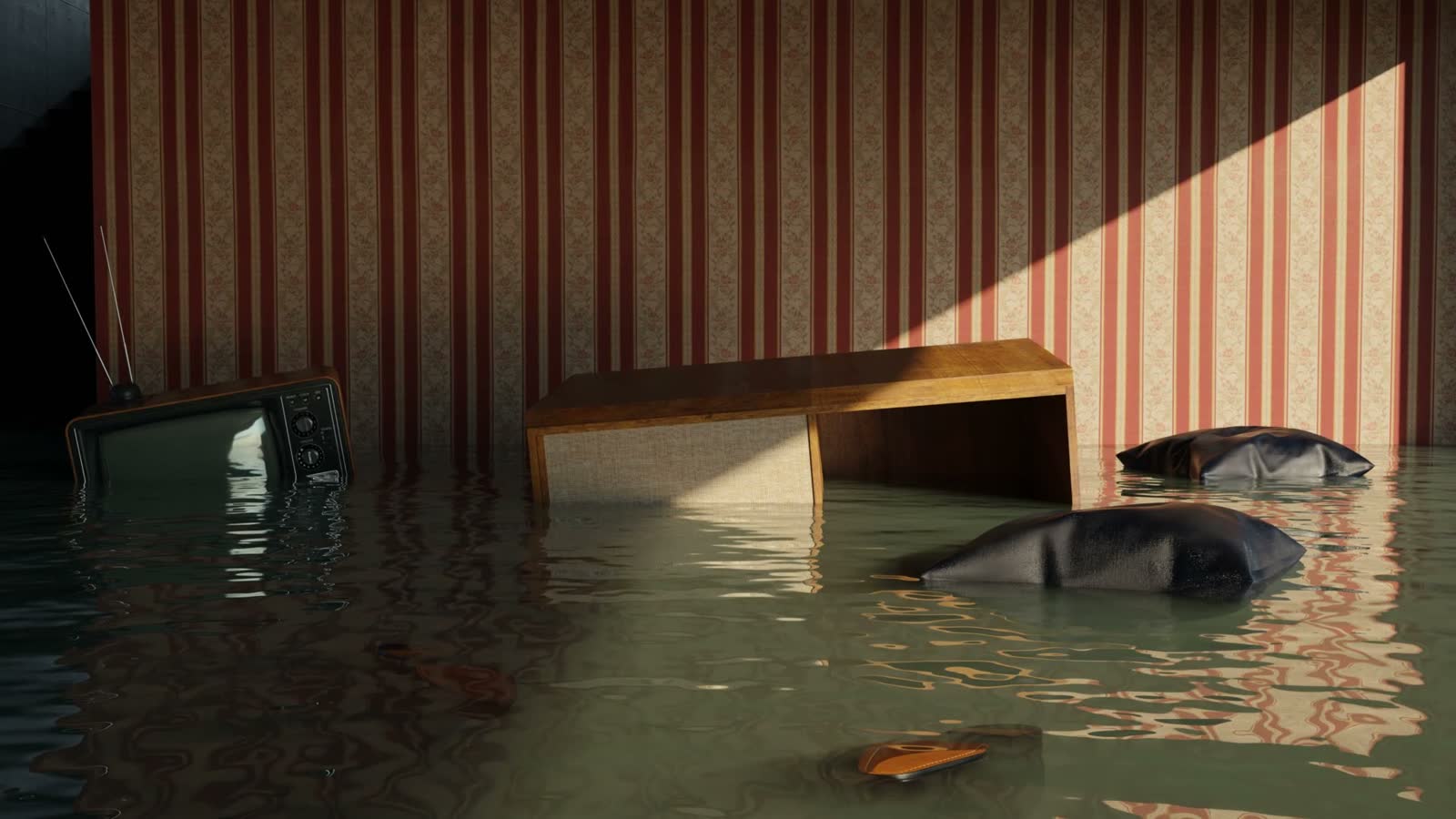
Every water claim has two components, and the policy treats them differently. The source of the loss , the pipe, valve, appliance, or seal that failed, is a maintenance item. Policies exclude the cost of repairing it. The resulting damage, the flooring, drywall, cabinets, and contents the escaping water ruined , is the covered loss. A $30 supply line, figures used here only as an illustration, can produce a covered claim of tens of thousands of dollars; the failed part itself is on you.
Between the two sits the mechanic most homeowners have never heard of: tear-out coverage. Standard forms pay the cost of tearing out and replacing the parts of the building necessary to reach the failed section, opening the wall, cutting the slab, even though the pipe repair itself is excluded. On slab and in-wall leaks the tear-out and put-back are frequently the largest line items in the claim. The mechanic, its Florida case law, and the sublimits now commonly capping it (often $10,000, but form-specific) are covered in depth in our burst-pipe and slow-leak guide.
The other coverage-preserving concept is the ensuing (resulting) loss doctrine: when an excluded cause sets off a separately covered peril, the ensuing covered loss can still be paid. Excluded slow corrosion that ends in a sudden pipe burst; excluded deterioration that leads to a covered water discharge, Florida courts read these clauses to preserve the sudden-loss portion of the claim. Carriers read them narrowly. The wording of your specific form controls, which is why the denial letter's paraphrase is never the final word.
Wear, tear, deterioration, the standing carve-outs
Alongside the 14-day clock, every policy excludes loss caused by "wear and tear, marring, deterioration," "mechanical breakdown," "rust or other corrosion," and "inherent vice or latent defect." On water claims these carve-outs do double duty: they exclude the failed component itself (uncontroversial), and carriers extend them to argue the entire loss is excluded because the component that failed was old. That extension is where denials overreach.
THE WEAR-AND-TEAR EXCLUSION: AND THE TAIL THAT SAVES CLAIMS (TYPICAL WORDING)"We do not insure for loss… caused by… wear and tear, marring, deterioration… rust or other corrosion… However, we do insure for any resulting loss from items… not [otherwise] excluded…"
The "however" sentence, the resulting-loss tail, is the answer to most wear-and-tear water denials. An aging washer hose is wear and tear; the flood it releases when it bursts is a resulting loss from a covered peril (accidental discharge). The carrier owes the water damage even though it never owed the hose. If your denial letter quotes the exclusion but not the tail, read the actual policy form. The same overreach pattern shows up on roofs, see wear-and-tear vs. wind denials, and on corroded cast-iron drain lines, where it fueled a statewide litigation wave.
The denial patterns on water claims
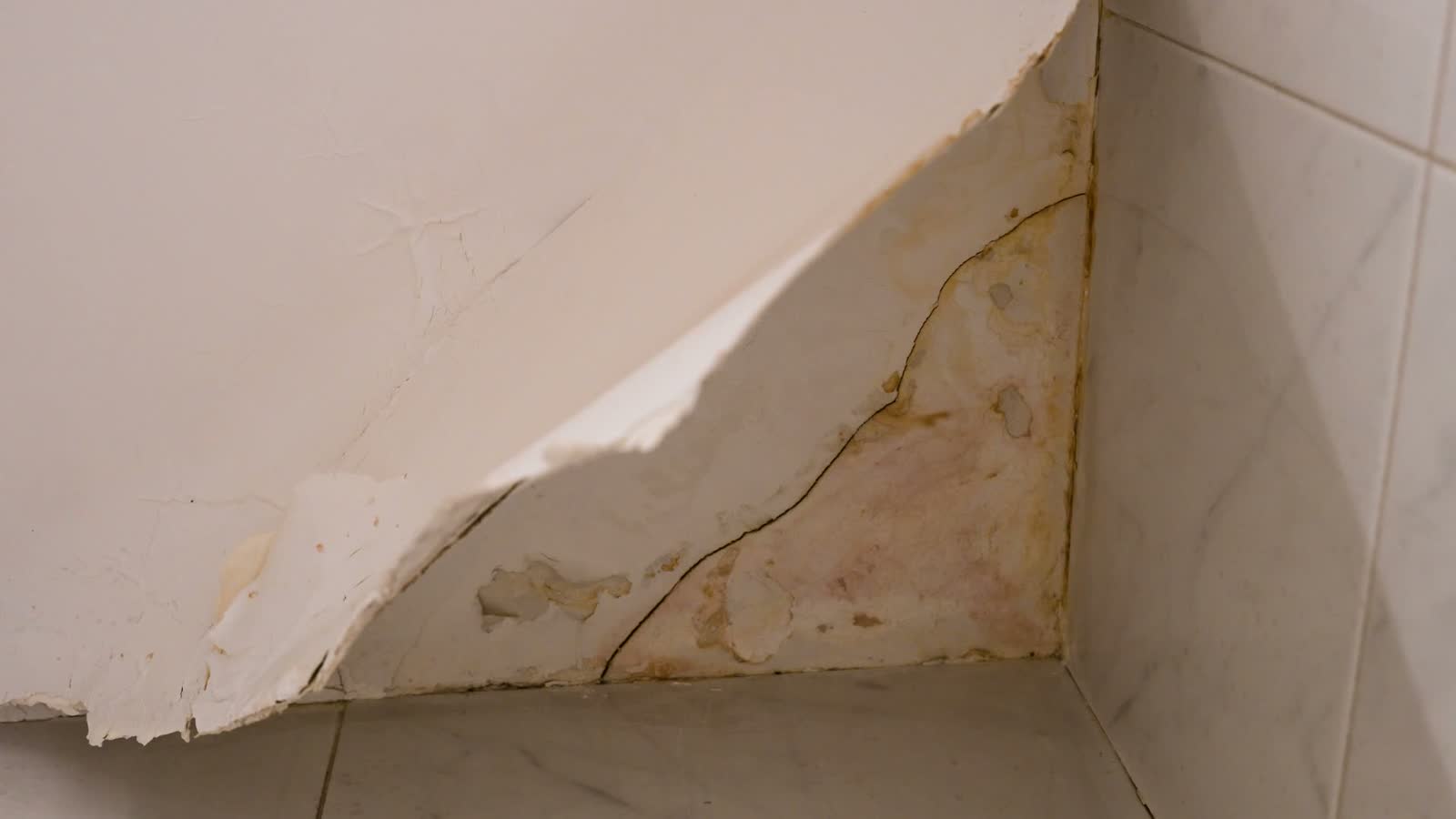
Water denials run on a short list of recurring arguments. Knowing them in advance is most of the defense:
- The duration opinion. An adjuster or retained engineer opines from staining, corrosion, or mineral deposits that the leak "must have" run longer than 14 days. It is an opinion, not a finding, and post-Hicks, it does not erase the first 13 days even if true.
- The mold bootstrap. Visible microbial growth is cited as proof of long duration, converting a water claim into an excluded seepage claim and capping any remainder under the mold sublimit. Fast, documented dry-out defeats the premise. See the mold coverage guide.
- Wear-and-tear extension. The failed part was old, therefore the whole loss is "deterioration." The resulting-loss tail answers this, the water damage is covered even when the part is not.
- The sublimit stop. Policies with limited-water endorsements pay to a cap, commonly $10,000, and close the file. Whether the cap even applies to your loss type, and what it includes, is a policy-language question worth checking. Detail in the pipes guide.
- Late notice. Florida's § 627.70132 one-year notice window and "prompt notice" conditions get applied against slow-discovery losses. When the clock starts on a hidden leak is contestable, but the safest answer is to report the day you find it.
- The maintenance framing. The denial letter recasts the event as a maintenance failure rather than an accidental discharge. The distinction is legal, not rhetorical, the discharge peril covers sudden releases regardless of why the component failed, subject to the actual exclusion wording. Compare your letter against the form: anatomy of a denial letter.
Documentation protocol: win the calendar
Because the 14-day clause makes every water claim a fight about time, the evidence that wins is the evidence that fixes points on the timeline. Four moves, in order:
Date-stamp the discovery
The moment you find water, create a record with a timestamp you don't control: photos and video on your phone (metadata intact), a text or email to yourself or your agent describing what you found, and the plumber's dispatch record. In a 14-day fight, the discovery date and the failure date are the two ends of the clock, fix one of them immediately.
Get moisture readings early
A water-mitigation company's moisture map, meter readings by room, by material, dated, is the physical record of how far the water had traveled at discovery. Fresh drywall saturation reads differently from long-term exposure. Early readings from a licensed mitigation firm are the counterweight to a later carrier expert opining the loss "must have been ongoing for months."
Control the plumber's report
The plumber's invoice is usually the first document the adjuster reads, and a casual phrase like "old leak" or "corroded for years" can sink the claim before it starts. Ask the plumber to state facts: what failed, where, what was observed, when it was repaired. Opinions about duration belong to qualified experts working from evidence, not to a one-line invoice.
Keep the failed part
The burst supply line, the cracked fitting, the failed valve, keep it. A fractured part is physical proof of sudden failure; a discarded one becomes "undocumented wear and tear" in the carrier's file. Photograph it in place before removal, then bag and label it. If the carrier wants destructive testing, that happens by agreement, not by accident.
Full photo methodology: the photo protocol · deadlines by state: claim deadlines and timelines · displaced during repairs: additional living expenses.
Storm claims: where water losses hide
After a hurricane, the seepage exclusion and its cousins do quiet work in the background of wind claims. Two recent Florida examples from our storm files:
Ian, 2022, roof damage that let water in slowly. A wind-lifted shingle or cracked tile admits rain gradually over the months after landfall; by the time the interior stain appears, the carrier can argue both "wind-driven rain without a storm-created opening" and "14-day seepage" on the same loss. Of 565,101 residential Ian claims in FLOIR's data, roughly 28% closed without payment, and delayed-discovery interior water was a recurring pattern in the disputes. The counter is a prompt post-storm roof inspection that dates the opening to the storm. See wind-driven rain denials.
Helene → Milton, 2024, below-deductible closures that aged into seepage arguments. FLOIR data across the two storms: 42% of 329,000+ residential claims closed without payment, many as "below deductible." Owners who re-inspected months later and found ongoing water intrusion from missed storm damage then faced duration-based pushback on the supplement. Owners who documented thoroughly between and immediately after the storms kept the timeline, and the claim.
Florida vs. South Carolina
- Seepage wording: the hard 14-day version dominates the market; Hicks preserves the first 13 days and puts the duration burden on the insurer.
- Deadlines: notice of claim within 1 year of the date of loss, supplemental within 18 months (§ 627.70132); carrier must pay or deny within 60 days (§ 627.70131); 5-year contract suit period.
- Sublimits: limited-water endorsements (commonly $10,000) and mold sublimits are widespread post-2022; managed-repair programs may control who does the work.
- Escalation: DFS mediation, appraisal where the policy provides it, mandatory pre-suit notice under § 627.70152.
- Seepage wording: ISO-style "weeks, months or years" language is more common than a hard day count, vaguer, and construed against the drafter where ambiguous.
- Deadlines: "prompt" notice per policy terms; no fixed pay-or-deny statute (reasonableness standard); 3-year contract suit period.
- Sublimits: limited-water endorsements are less prevalent than in Florida's post-2022 market, but appearing; read the declarations page.
- Escalation: SC DOI consumer complaint, appraisal, and the improper-claims-practices law (S.C. Code § 38-59-20) as the conduct backstop.
Deadlines shown are general rules as of July 2026 and have exceptions. Policy wording varies by carrier and form year, the analysis on this page describes typical market language, not your specific policy. Verify against your policy and current statute.
Sudden water damage, the questions everyone asks
Is sudden water damage covered by homeowners insurance?
Generally yes. Standard open-peril (HO-3-style) policies cover sudden and accidental discharge or overflow of water from plumbing, HVAC, appliances, or sprinkler systems, the burst supply line, the failed water heater, the overflowing washing machine. What is excluded is gradual water: seepage or leakage over time, with Florida-market policies typically drawing the line at 14 or more days.
What does the "14 days" exclusion actually mean?
Most Florida policies exclude loss caused by "constant or repeated seepage or leakage of water... over a period of 14 or more days." It targets slow leaks, under sinks, inside walls, behind appliances. That cause damage gradually. Under Hicks v. American Integrity (Fla. 5th DCA 2018), the exclusion does not wipe out the whole claim: damage caused during the first 13 days remains covered, and the insurer bears the burden of proving what damage the excluded period caused.
A pipe leaked while I was out of town for a month. Am I covered?
Partially, in many cases. That was essentially Hicks: a refrigerator supply line leaked for weeks while the owner was away. The court held the first 13 days of damage were covered even though the total leak ran longer. Expect the carrier to argue most of the damage happened after day 14, which is why moisture readings, the plumber's findings, and expert analysis of the damage progression matter. Note that separate vacancy or unoccupancy conditions in some policies can also come into play for long absences.
Does insurance pay for the plumber and the broken pipe itself?
Usually not the pipe. Policies exclude the cost of repairing the system or appliance that failed. That's maintenance. But they typically DO pay for the resulting water damage and for tearing out and replacing parts of the building needed to reach the failed section: opening the wall, cutting the slab, then putting it back. See our burst-pipe guide for the tear-out mechanic in detail.
The water damage caused mold. Is that covered?
Mold from a covered water loss is often covered, but almost always capped by a mold sublimit ($10,000 is common in Florida) and dependent on prompt mitigation. Mold from long-term seepage inherits the seepage problem: carriers argue visible mold growth itself proves the leak ran longer than 14 days. Fast dry-out documented by a mitigation company protects both the water claim and the mold claim.
How long do I have to report a water damage claim?
In Florida, § 627.70132 requires notice of a new property claim within 1 year of the date of loss (18 months for supplemental claims), and for a slow-discovery water loss, when the clock starts can itself be disputed. In South Carolina, policies require "prompt" notice and the contract suit period is generally 3 years. Late notice is a standard denial ground in both states; report as soon as you find the damage, even if you don't know the full scope yet.
The adjuster says the stains prove a "long-term leak." Is that the end?
No. Staining, corrosion, or mineral deposits are evidence, not verdicts. Under an all-risk policy, once you show physical loss during the policy period, the burden shifts to the insurer to prove an exclusion applies, including proving the duration. Your own evidence (moisture maps, humidity data, the failed part, expert analysis of material degradation rates) can contest a duration opinion, and appraisal or litigation can test it.
- BUTLER Hicks v. American Integrity Ins. Co. of Fla., 241 So. 3d 925 (Fla. 5th DCA 2018), case analysis ↗
- MARSHALL DENNEHEY "Constant or Repeated Seepage Over a Period of 14 Days or More", exclusion analysis ↗
- PICL BLOG The "continuous or repeated seepage" exclusion, national (ISO) wording survey ↗
- TRIPLE-I Homeowners claims frequency & severity, water damage and freezing ↗
- FL LEGISLATURE Fla. Stat. § 627.70132, notice of property insurance claim (1 yr / 18 mo) ↗
- FL LEGISLATURE Fla. Stat. § 627.70131, insurer acknowledgment, investigation, and 60-day pay-or-deny ↗
- SC LEGISLATURE S.C. Code § 38-59-20, improper claim practices ↗
- FLOIR FLOIR Hurricane Ian catastrophe claims data ↗
- FLOIR FLOIR Hurricane Helene claims data ↗
Not legal advice; consult an attorney about your specific claim. Policy language quoted is typical market wording; your form controls.
The whole fight is the calendar, and evidence is what dates it
Sudden and accidental discharge is covered; damage from seepage lasting 14 or more days is excluded, and that clause is the first a Florida adjuster reaches for. The sorting rule is speed. Hicks v. American Integrity keeps the first 13 days covered even when the leak ran longer, and puts the burden on the insurer to prove what the excluded days caused. The failed pipe is excluded as maintenance, but the resulting water damage and the tear-out to reach it are covered. Mold from a covered loss is usually paid but capped by a sublimit, commonly $10,000.
The evidence that wins fixes points on the timeline. Date-stamp the discovery, get moisture readings, keep the plumber's report factual, and preserve the failed part; document before you tear out drywall, per our photo protocol. Report fast: Florida's § 627.70132 gives 1 year to notice and 18 months for a supplemental, while South Carolina requires prompt notice with a 3-year suit period, so confirm your window in the claim deadlines. If repairs push you out of the house, additional living expenses may apply. If the denial quotes the seepage exclusion but not Hicks, or extends wear-and-tear to the whole loss, the characterization is contestable: the burst-pipe and slow-leak and mold coverage guides cover the sublimits and tear-out, and wind-driven rain denials explain how storm water hides inside a 14-day argument. The free review below reads your denial, photos, and plumber invoice.
Denied because the leak "lasted 14 days"? Make them prove it.
Upload the denial letter, your photos, and the plumber's invoice. You'll get a straight answer on whether the duration argument holds against your evidence, and what the covered days of your claim may still be worth.

 HURRICANELAW.PRO
 A comprehensive property-insurance claim resource for policyholders: denied and underpaid claims, coverage and bad-faith law, storm dossiers, carrier profiles, city guides, and the complete claims playbook. Florida and South Carolina.
▸ SEE THE FULL SITE MAP →Coverage summaries, policy-language quotations, dollar figures, deadlines, and chart examples throughout this site are general information based on typical or standard policy forms and are illustrative only: they are not a quote, a guarantee of coverage, or a promise of any outcome. Every insurance policy is different: your own policy, endorsements, and state law control, so read your policy and confirm current statutes. Weather imagery courtesy of NOAA, the National Hurricane Center, and the National Weather Service. Legal services are provided by Halversen Law. Nothing on this site is legal advice; consult an attorney about your specific claim.
Legal matters are handled by Halversen Law, a law firm licensed in Florida and South Carolina.