
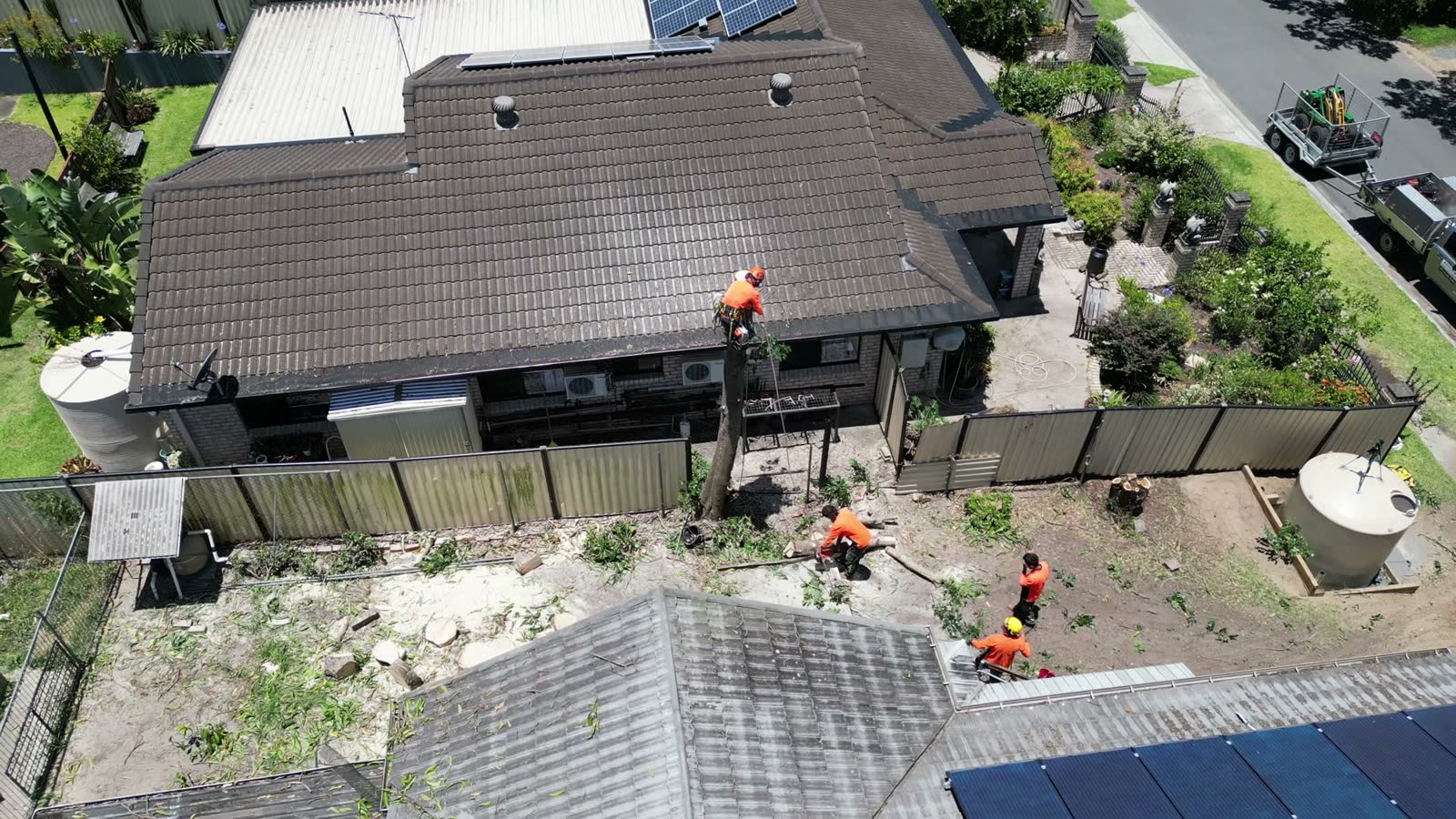
Does insurance cover tree removal?
Removal is covered only if the tree hit a covered structure or blocked a driveway or handicap ramp. The payout is capped at $1,000 per loss and $500 per tree. A tree that falls in the yard and hits nothing draws no removal coverage, and the cap does not limit repair of what the tree destroyed.
| Covered when | the tree hit a covered structure or blocked a driveway or ramp |
|---|---|
| Cap per loss | $1,000 |
| Cap per tree | $500 |
| Hit nothing | no removal coverage |
| Repairs | outside the removal cap |
- ▸Removal is covered only if the tree hit a covered structure or blocked a driveway or handicap ramp.
- ▸The payout is capped at $1,000 per loss and $500 per tree, a fraction of a typical crane-and-haul bill.
- ▸A tree that falls in the yard and hits nothing draws no removal coverage at all.
- ▸The blocked-driveway exception is the only time a "hit nothing" tree gets removal coverage; document the blockage.
- ▸The sublimit caps removal only; it does not limit the repair of what the tree destroyed.
Covered, but only through two narrow gates
Tree removal is the part of a storm claim that surprises the most people, because the coverage answers a narrower question than the one homeowners ask. They ask, "there's a tree down, will insurance clear it?" The policy asks two entirely different questions: did the tree damage a covered structure, and if it did, how much will we pay to remove it? Miss either gate and the removal falls on you.
This page is about the removal line specifically, not the roof repair, which is covered separately and far more generously (see tree on house). Removal is the low-cap, high-surprise corner of the claim, and it is where carriers and homeowners talk past each other most often.
Gate one: did it hit something covered. Gate two: the cap
Gate one: the trigger. Removal coverage exists only when the fallen tree damaged a covered structure (dwelling, detached garage, shed, fence) or blocked your driveway or a handicap-access ramp. That is the on/off switch. No covered damage and no blocked access means no removal coverage, full stop.
Gate two: the cap. Once the trigger is met, the payout is limited to $1,000 in any one loss and $500 for any one tree. Those two numbers are the whole ballgame. A single large tree on the roof: $500 toward the crane bill. Two trees on the house: $1,000 total, $500 counted against each. The cap does not scale with the size of the tree or the difficulty of the removal. It is flat, and it is low relative to what tree services actually charge.
The fallen-but-hit-nothing gap
The largest and least-understood gap: a tree that falls and hits nothing. A ninety-foot pine that the wind lays flat across your back lawn (missing the house, the shed, the fence, and the driveway) generates zero removal coverage. There is no covered property damage to trigger the debris-removal clause, and windstorm is not a covered peril for the tree itself under the trees-and-plants coverage. You pay to cut it up and haul it away, and you pay to replace it if you want it replaced.
This surprises people because the tree is enormous, the storm was violent, and the cleanup is expensive. But none of that is what the policy asks about. Coverage turns on whether the tree damaged something the policy insures. The yard tree, however large, did not. Knowing this before you call a tree service saves you from assuming a reimbursement that will never come.
The driveway and ramp exception
Standard ISO language carves out one exception to gate one. Even when the fallen tree damaged no structure, the policy still pays removal (within the same $1,000 / $500 cap) if the tree blocks a driveway and prevents a motor vehicle from entering or leaving, or blocks a ramp or other fixture designed to assist a person with a disability. The logic is access: the policy recognizes that a tree sealing you out of your own driveway, or blocking a wheelchair ramp, is a loss worth clearing even if nothing was crushed.
The practical move: if a tree drops across your driveway, photograph the blockage (the tree spanning the driveway, your vehicle trapped or shut out) before you clear a path. Access is the fact that triggers this coverage, and access is provable only before you remove the obstruction. Our documentation guide covers exactly which shots to take.
How the $1,000 cap compares to a removal bill
Why the debris-removal cap runs out fast
The four bars are made-up example jobs, placed on one dollar axis only to show how a fixed $1,000 removal sublimit relates to the kind of tree work a storm creates. The vertical line is that $1,000 cap. The point is the shape of the gap, not any specific number.
The takeaway is structural, not the exact dollars: a fixed sublimit does not scale with the job, so a crane removal usually blows past it and you carry the rest, unless you raised the debris-removal limit by endorsement.
What's assumed here: the four job costs ($400, $1,200, $2,800, $4,500) are hypothetical figures chosen to illustrate the point. They are not quotes, averages, or survey data, and real tree-removal prices vary widely by region, tree size, access, and disposal. The $1,000 / $500 sublimit is the wording found in a typical unendorsed ISO HO-3 form (HO 00 03); your policy may use different limits, perils, or an increased-limit endorsement. Get a real written estimate and read your own declarations page. Do not rely on these numbers.
ILLUSTRATIVE EXAMPLE · $1,000 / $500 SUBLIMIT PER A TYPICAL UNENDORSED ISO HO-3 (HO 00 03)
The policy language that controls removal
DEBRIS REMOVAL · TREE-REMOVAL PROVISION (TYPICAL ISO HO-3 WORDING)"We will pay your reasonable expense, up to $1,000, for the removal from the residence premises of your tree(s) felled by the peril of Windstorm or Hail or Weight of Ice, Snow or Sleet… provided the tree(s): (a) damage a covered structure; or (b) do not damage a covered structure but block a driveway on the residence premises which prevents a motor vehicle… from entering or leaving; or block a ramp or other fixture designed to assist a handicapped person. The $1,000 limit is the most we will pay in any one loss, regardless of the number of fallen trees. No more than $500 of this limit will be paid for the removal of any one tree."
Read the triggers in order: it must be your tree, felled by a listed peril, and it must either damage a covered structure or block access. Every word is a gate. "Felled by Windstorm or Hail or Weight of Ice, Snow or Sleet" even excludes a tree that simply died and toppled on a calm day. Your form controls. Some carriers modify the list of triggering perils or the dollar limits, and a few sell a higher limit by endorsement.
How to protect the removal claim
- Photograph the tree on the structure or across the driveway before it moves. The impact or the blockage is what triggers coverage. Capture it first.
- Separate the removal bill from the repair estimate. Keep the tree-service invoice distinct from the roofer's estimate so the carrier can't fold the full-limit repair into the capped removal line.
- Get an itemized removal invoice. "Reasonable expense" is the standard: an itemized bill showing crane, labor, and haul-off supports the amount up to the cap.
- Mitigate, and keep those receipts too. Tarping and emergency measures to prevent further damage are recoverable separately from the removal sublimit. See our after-the-storm guide.
- Check your declarations for an increased limit. If you bought a higher debris-removal or trees-and-shrubs endorsement, the $1,000 figure may not be your real cap.
Florida vs. South Carolina
- Removal sublimit: the $1,000 / $500 ISO cap is contractual; some FL carriers offer an increased debris-removal endorsement.
- Triggering peril: in a hurricane, the hurricane deductible governs the underlying structural loss; removal remains capped on top.
- Claim deadlines: 1 year to notice, 18 months supplemental (§ 627.70132); pay-or-deny in 60 days (§ 627.70131).
- Removal sublimit: same ISO $1,000 / $500 framework on standard forms; coastal wind-pool policies may address debris differently.
- Triggering peril: named-storm deductibles are contractual; the removal cap sits on top of the underlying loss the same way.
- Claim deadlines: "prompt" notice per policy; 3-year contract suit period.
Sublimits and deadlines summarized as of July 2026, and policy-specific provisions differ. Read your policy and endorsements before relying on it.
Tree-removal coverage: the questions everyone asks
Does homeowners insurance pay to remove a fallen tree?
Only in specific situations. Standard homeowners coverage pays to remove a fallen tree when the tree damaged a covered structure (your house, garage, shed, or fence) or when it blocked your driveway or a handicap-access ramp. Even then, the payout is capped at $1,000 per loss and $500 per tree. If the tree fell in your yard and hit nothing, there is no removal coverage at all.
What is the tree-removal sublimit?
On standard ISO HO-3 language, tree-removal expense is limited to $1,000 in any one loss, and no more than $500 for the removal of any one tree, regardless of how many trees fell. So two trees on one house is still $1,000 total, counted as up to $500 per tree. Some carriers offer a higher debris-removal limit by endorsement; check your declarations page.
A huge tree fell in my yard but missed the house. Why is removal not covered?
Because the policy insures your house, not your trees or your yard. Removal coverage is triggered only by damage to a covered structure or a blocked driveway or ramp. A tree that falls in open yard causes no covered property damage and blocks no access, so there is nothing for the policy to respond to. The removal is your out-of-pocket expense, often $500 to several thousand dollars.
The tree is blocking my driveway but did not hit the house. Any coverage?
Yes. This is the one exception. Standard ISO language grants removal, still within the $1,000 / $500 sublimit, when a fallen tree blocks a driveway and prevents a vehicle from getting in or out, or blocks a ramp or fixture designed to assist a person with a disability. Document the blockage with photos before you clear it, because access is the fact that triggers the coverage.
Does the removal cap limit the whole tree claim?
No. The sublimit applies only to physically removing the tree. The repair of what the tree destroyed (roof, framing, interior) is covered separately under your dwelling and contents limits, not the $1,000 removal cap. A common carrier error, and a common homeowner misreading, is treating the removal sublimit as the ceiling on the entire claim. It is not.
Who pays to remove the part of the tree still standing or hanging dangerously?
Generally you do. Removal coverage addresses the fallen tree that caused covered damage or blocked access. A cracked, leaning, or hazardously hanging tree that has not yet fallen is treated as maintenance, not a covered loss, even though clearing it is the prudent thing to do. Preventive removal of a damaged-but-standing tree is almost never reimbursed.
Can I increase my tree-removal coverage?
Often, yes. Many carriers sell an increased debris-removal or "trees and shrubs" endorsement that raises the sublimit above the standard $1,000 / $500 for a modest premium. If you own large mature trees near the house, it is one of the cheapest gaps to close before the season. Ask your agent what a higher debris-removal limit costs on your policy.
- IA MAGAZINE ISO HO-3 (HO 00 03) Debris Removal: $1,000 per loss / $500 per tree; covered-structure and driveway/ramp triggers (analysis) ↗
- IA MAGAZINE IA Magazine: Coverage A limit and debris removal (how the sublimit interacts with the dwelling limit) ↗
- FEMA FEMA: Hurricane Irma debris removal grants in Florida (removal cost context) ↗
- FL LEGISLATURE Fla. Stat. § 627.70132: notice of property insurance claim deadlines ↗
Not legal advice; consult an attorney about your specific claim.
What the policy pays to remove a fallen tree, and the cap that surprises people.
Debris removal on homeowners forms splits into two cases. If the tree damaged a covered structure, removal of that tree is covered, often up to a sublimit such as 500 or 1,000 dollars, or a small percentage of the dwelling limit. If the tree fell and damaged nothing, most forms pay nothing, or a flat amount only when the tree blocks a driveway or a disabled resident's ramp. The line is structural contact, which is why a tree-on-house loss is treated differently from a tree that missed the building.
Read the debris-removal clause with the additional-coverages section: the sublimit is separate from and added to the structure payment on many forms, but not all. When the tree came down in a named storm, the loss runs through the hurricane deductible in wind and hurricane coverage, so a modest removal bill can fall entirely inside the deductible and pay zero, a pattern tracked in the denials library. Stump grinding, hauling, and lot cleanup are usually excluded. Photograph the tree in place before any saw touches it: the photo protocol lists the shots and the filing steps show how to submit them.
Removal capped or denied on your tree claim?
Upload the tree-service invoice, the adjuster's estimate, and your photos of the tree and the impact or blockage. You'll get a straight answer on whether the cap was applied correctly, and whether the repair was wrongly folded into it.