
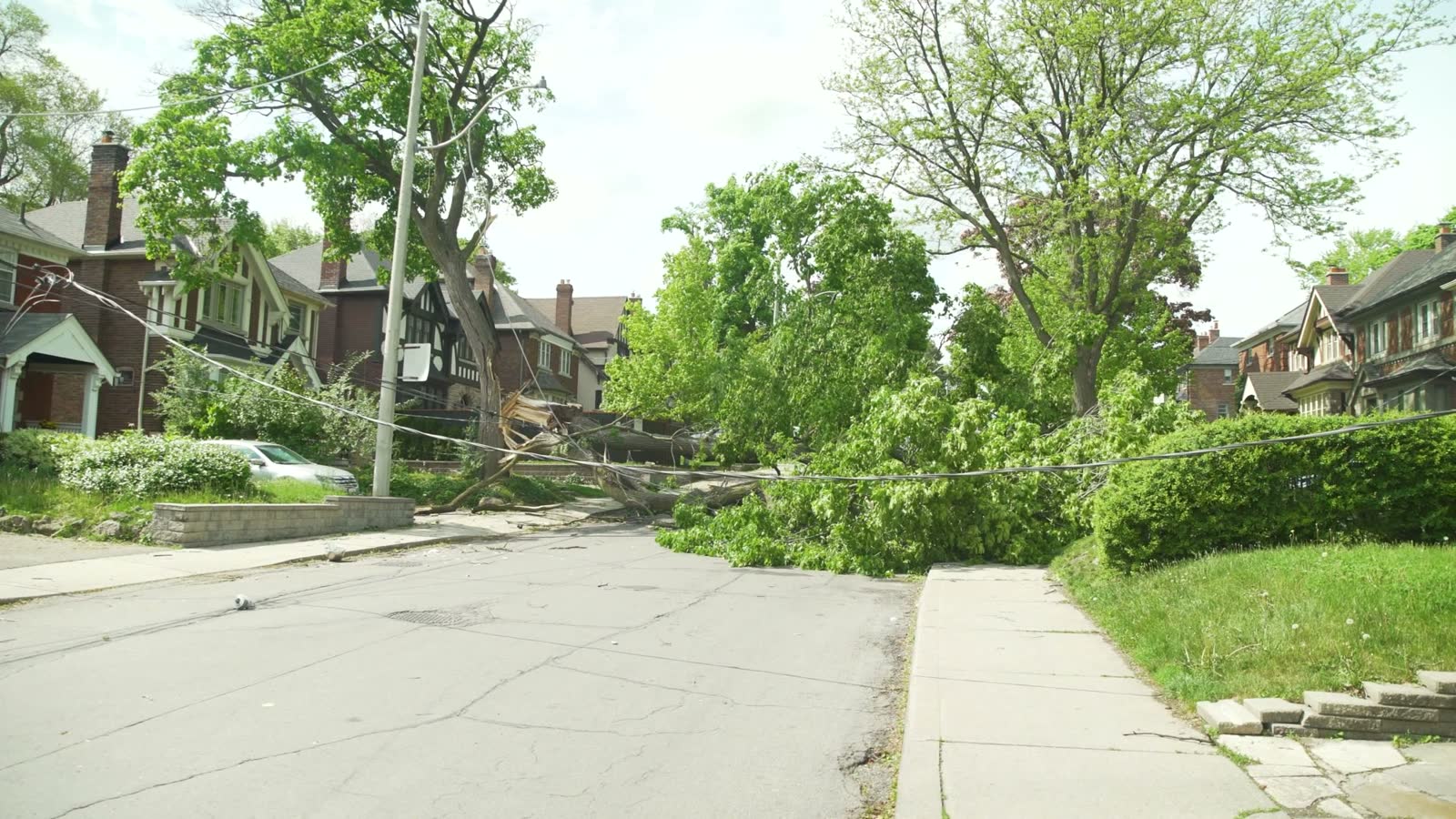
What does insurance pay when a tree falls in a storm?
- • A tree that wind or a storm drops on your house is a covered loss: the dwelling and contents damage is paid like any other wind loss, subject to your deductible.
- • The catch is removal: standard, unendorsed ISO HO-3 language caps tree removal at $1,000 per loss and $500 per tree, and only if the tree damaged a covered structure or blocked a driveway or ramp. Your policy may differ; read yours.
- • A tree that falls in your yard and hits nothing generally is not covered on a standard form: not the tree, not its removal. Windstorm is not a covered peril for the trees themselves.
- • When a neighbor’s tree hits your house, your own policy pays regardless of whose tree it was. The neighbor is liable only if the tree was dead, diseased, or a known hazard they ignored.
- • Most tree-claim denials are not about coverage. They turn on the removal sublimit, the "did it hit a structure" rule, and rot-vs-wind causation.
Find the tree. Find the fight.
Did the tree hit something the policy covers?
A homeowners policy does not insure trees. It insures your house. So the question is never "did a tree fall." It is whether the tree damaged a covered structure or blocked your access. That single line decides the whole claim. Each row links to the guide that maps it.
Wind-felled tree that damages a covered structure: repair paid under Coverage A, removal paid up to the sublimit.
Damage to other structures is covered under Coverage B, typically 10% of your dwelling limit.
ISO grants removal even with no structural hit if the tree blocks a driveway or a handicap-access ramp.
Your own policy responds regardless of whose tree it was; same coverage, same sublimit.
No structure damaged, no access blocked: on a standard form, no removal coverage, and none for the tree itself.
Windstorm is not a covered peril for the trees, shrubs, and plants coverage: only fire, lightning, theft, and a few others.
A crane job on a large oak can run several thousand dollars; the sublimit stops at $1,000, and $500 for any one tree.
A tree the carrier calls diseased or neglected gets the loss reclassified out of coverage entirely.
The damage is real on both sides of this chart. Coverage turns on where the tree landed and what the removal costs, not on how violent the storm was. Our removal-coverage guide takes the sublimit apart dollar by dollar.
Based on typical ISO HO-3 (HO 00 03) policy language: Debris Removal and Trees, Shrubs and Other Plants additional coverages. Forms vary by carrier and state. Read your policy.
Tree damage claims: where the coverage actually lives.
Every tree claim reduces to two facts: what the tree hit, and whether it was alive when it fell. FL and SC homeowners policies insure the building, not the tree, so a tree that strikes a covered structure opens a claim under the dwelling section, while one that lands on the lawn pays only a capped removal amount, usually 500 to 1,000 dollars. Start with the tree fell on my house guide for the core rule; read the neighbor's tree fell on my house guide when it grew next door, because your own policy pays first regardless of the property line. Removal coverage explains the sublimit that surprises people.
Documenting the damage decides the rest: FL and SC adjusters rebuild the loss from photos, and images of fresh wood at the break defeat the dead-tree defense. Shoot the scene before any crew cuts or tarps. Denials usually cite one of four reasons: pre-existing decay, no structural damage, the hurricane deductible, or water called flood. The denial patterns page shows what beats each, and the denials library covers exclusions carriers reuse across every peril. Deadlines run from the date of loss, so do not wait.
Tree claim shorted, capped, or denied?
Upload the estimate or denial letter and your photos of the tree, the impact point, and the interior. You'll get a straight answer on whether the removal cap, the "no structure hit" call, or the rot argument actually holds up.