- •Florida Statute § 718.111(11) splits the building: the association master policy covers the structure "as originally installed"; the unit owner’s HO-6 covers everything installed inside.
- •The statute names the owner’s list precisely: floor, wall, and ceiling coverings, cabinets, appliances, water heaters, and window treatments.
- •The master-policy hurricane deductible, often 2% to 5% of a multimillion-dollar building, is a common expense (§ 718.111(11)(j)) and passes through to owners as a special assessment.
- •HO-6 loss-assessment coverage absorbs that share, but the common $1,000 default limit is nowhere near enough.
- •Post-Surfside, SB 4-D reserve and inspection laws now land at the same time as hurricane assessments, compounding the bill.
The split, at a glance
A condominium is one building with two insurance regimes. The association carries a master policy on the structure; every owner carries an HO-6 on the inside of their unit. A hurricane hits both at once, taking the roof, the drywall, and the kitchen cabinets in one pass, but the two policies split the bill. The first question in every condo claim is which side of the statutory boundary each piece of damage falls on.
Master policy vs. unit-owner HO-6
Florida draws the line by statute, not by negotiation. The left column is what the association must insure. The right is what the law hands to the unit owner, named item by item.
Roof, exterior and load-bearing walls, floor slabs, the building envelope: all portions of the condominium property as originally installed or replaced with like kind and quality.
Lobbies, hallways, elevators, stairwells, the pool, the parking structure, and everything the declaration calls a common element.
On policies issued or renewed after Jan 1, 2009, the master policy is primary over any unit-owner policy for the property it must insure.
The unit interior as it left the developer: the original drywall, subfloor, and building systems serving more than one unit.
Floor, wall, and ceiling coverings; built-in cabinets and countertops; appliances; water heaters and filters: the exact list the statute assigns to the owner.
Curtains, drapes, blinds, hardware, and similar components, named in § 718.111(11)(f) as the owner’s responsibility.
Contents, plus any upgrade or improvement the owner made over the original build.
The owner’s slice of a special assessment, including the master-policy hurricane deductible passed through.
The boundary is roughly the interior surface of the original unit: the structure is the association’s; the coverings, cabinets, and everything installed inside are the owner’s.
SPLIT PER FLA. STAT. § 718.111(11)(f) · DECLARATIONS AND ENDORSEMENTS CAN SHIFT ITEMS
The practical trap: a hurricane that breaches the roof (association) and floods the units below (owner interiors) produces two claims on two policies with two adjusters, and each has an incentive to push scope onto the other policy. The owner whose ceiling collapsed is told to look to the association; the association points at the owner’s HO-6. Reading the statutory list before the argument starts is the difference between a coordinated claim and a stalemate.
The statute: § 718.111(11)
Florida’s Condominium Act does not leave the master-vs-unit line to the declaration alone; it writes it into statute. Fla. Stat. § 718.111(11)(f) requires the association to insure all portions of the condominium property as originally installed, or replacement of like kind and quality, and to exclude a specific list of items that become the unit owner’s responsibility. That list is the whole ballgame:
FLA. STAT. § 718.111(11)(f) · THE UNIT-OWNER CARVE-OUT (STATUTORY WORDING)"… all personal property within the unit or limited common elements, and floor, wall, and ceiling coverings, electrical fixtures, appliances, water heaters, water filters, built-in cabinets and countertops, and window treatments, including curtains, drapes, blinds, hardware, and similar window treatment components, or replacements of any of the foregoing which are located within the boundaries of the unit and serve only such unit."
Read it closely: everything on that list is the owner’s to insure and the association’s to exclude. The master policy is primary on the property it must cover (for policies issued or renewed on or after January 1, 2009), so a unit owner cannot be forced to run their HO-6 first on structural damage the association is required to insure. When a carrier or a board tries to shove structural loss onto owners’ policies, the statute is the answer.
The reconstruction duty follows the insurance duty. Under § 718.111(11)(g), unit owners are responsible for the cost of reconstructing any portion of the condominium property they are required to insure, and that obligation is enforceable as an assessment. The line the statute draws for insurance is the same line it draws for who has to rebuild.
The unit-owner HO-6
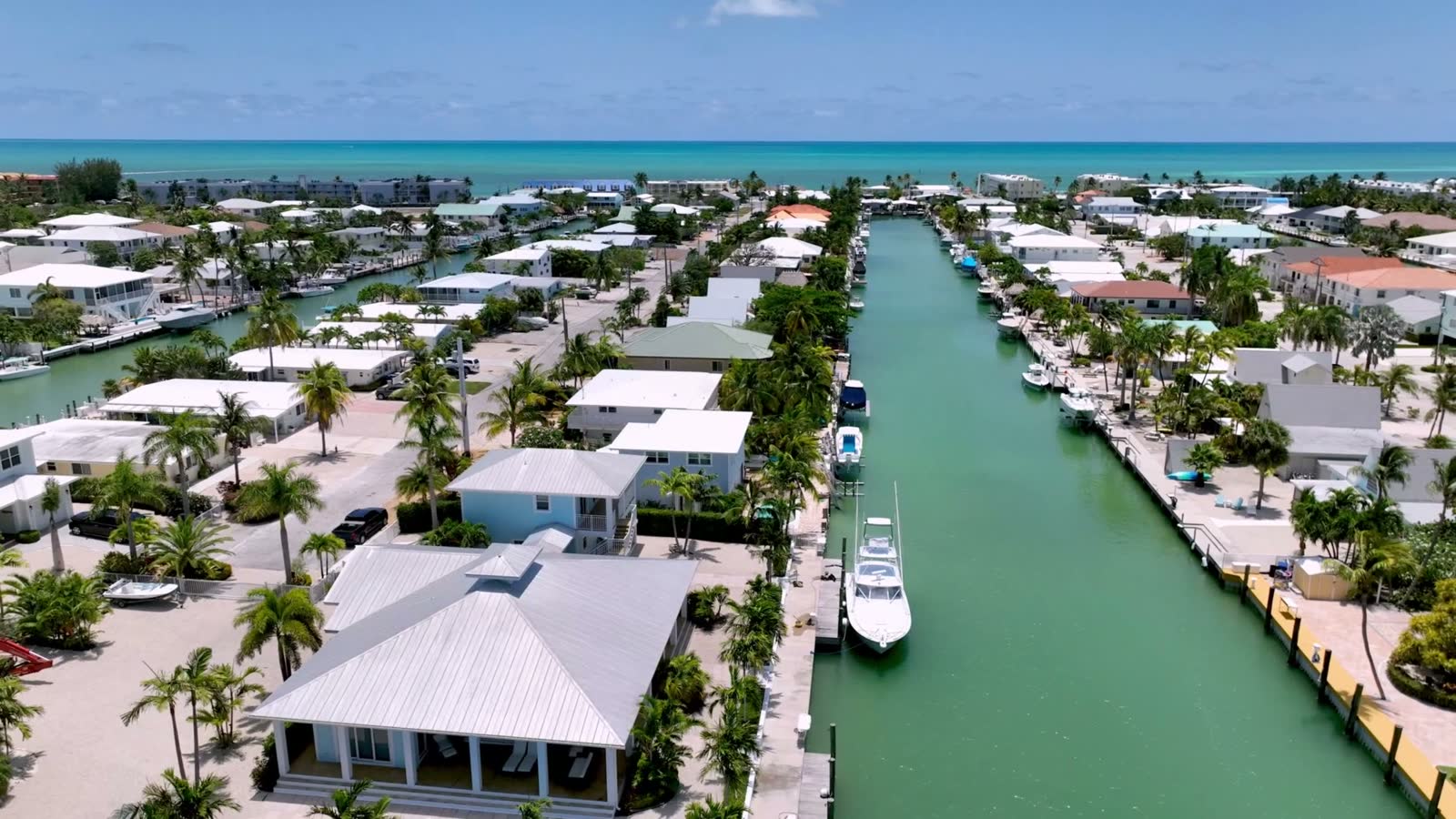
The HO-6 is the homeowners form built for exactly this gap. It insures the unit interior, the "walls-in" or "studs-in" build-out the master policy excludes, plus the owner’s personal property, betterments and improvements, personal liability, and loss of use while the unit is uninhabitable. In a condo, the HO-6 is not optional padding; it is the only policy standing behind the exact list of items § 718.111(11)(f) hands to the owner.
Three HO-6 line items decide most hurricane claims. First, Coverage A (dwelling / building property) must be high enough to rebuild the interior to its current, upgraded condition, not the developer’s original finishes. Second, betterments and improvements: a renovated kitchen or an upgraded floor is the owner’s to insure, and an under-scheduled HO-6 leaves the upgrade uncovered. Third, loss assessment (the coverage that absorbs the owner’s share of the association’s deductible, covered next). The HO-6 limits are set by the policy and the ISO form, not by statute; the statute only defines the boundary the HO-6 has to fill.
The deductible pass-through
Here is where condo owners get blindsided. A Florida condominium master policy carries a hurricane deductible, commonly 2% to 5% of the insured building value, computed on the whole structure. To illustrate with round numbers: on a hypothetical $40,000,000 oceanfront tower, a 3% hurricane deductible would be $1,200,000 the association must absorb before the master policy pays a dollar. That money does not come from nowhere. Your building’s value and deductible percentage, and therefore the dollars, will differ; read your master policy.
Under Fla. Stat. § 718.111(11)(j), all property-insurance deductibles and damages in excess of the master policy’s coverage are a common expense of the condominium. The board can levy a special assessment to fund the deductible, and, because it is a common expense, it can generally do so without a membership vote. Each owner owes their proportionate share by unit. Continuing the same example, a $1,200,000 deductible in a 200-unit building would leave an owner with a 0.5% interest owing roughly $6,000 before a single interior repair is paid, with the real figure turning on the actual deductible and each owner’s share.
FLA. STAT. § 718.111(11)(j) · DEDUCTIBLE AS COMMON EXPENSE (STATUTORY WORDING)"All property insurance deductibles … and other damages in excess of property insurance coverage under the property insurance policies maintained by the association are a common expense of the condominium."
The pass-through is legal, it is fast, and most owners never see it coming until the assessment letter arrives. It is also exactly the loss that HO-6 loss-assessment coverage exists to pay, which is why the next section matters more than any other line on the policy.
Loss-assessment coverage
Loss-assessment coverage is the HO-6 add-on that pays the unit owner’s share of a special assessment the association levies for a covered common-area loss, including the master-policy hurricane deductible passed through under § 718.111(11)(j). It is the only coverage aimed at that pass-through, and it is almost universally under-bought.
The problem is the default limit. Many HO-6 policies include loss-assessment coverage at a $1,000 default, a figure set for a routine special assessment, not a catastrophe deductible. Against a pass-through share that can run five figures after a major hurricane, $1,000 is a rounding error. Coastal Florida owners are routinely advised to raise it to $10,000, $25,000, or $50,000, at a premium cost measured in tens of dollars a year. There is one further catch worth reading in your own policy: some forms cap the portion of a loss-assessment claim attributable to the master-policy deductible at a sublimit (often $2,000) even when the overall loss-assessment limit is higher.
The pass-through, unit by unit
A worked example using round numbers: a 3% hurricane deductible on a hypothetical $40M, 200-unit tower is $1,200,000 the association absorbs first, then splits across owners as a special assessment. Here is one owner’s share against three loss-assessment limits. The dollars illustrate the mechanism, not any real building’s numbers.
Every bar is the same $6,000 share. Only the loss-assessment limit changes, and the "$" value is what the owner pays out of pocket after coverage.
About these figures: the $40M building value, the 3% deductible, the 200 units, the 0.5% owner share, and the resulting $6,000 assessment are round example figures chosen to show how a master-policy hurricane deductible passes through: they are not a quote, an average, or any real association’s numbers. The $1,000 default and $2,000 deductible sublimit are common HO-6 figures but vary by form. Real deductibles, building values, unit counts, ownership shares, and loss-assessment limits differ by policy and declaration. Read your master policy and your own HO-6. Do not rely on these figures.
ILLUSTRATIVE EXAMPLE · HYPOTHETICAL $40M BUILDING / 3% DEDUCTIBLE / 200 UNITS / 0.5% SHARE, NOT A QUOTE · LOSS-ASSESSMENT PER HO-6 FORM
The board’s fiduciary duty
The unit owner’s claim depends on decisions the board made long before the storm. Under § 718.111(1)(a), the association’s officers and directors owe unit owners a fiduciary relationship. Under § 718.111(11)(a), the association must use its best efforts to obtain and maintain adequate property insurance, and "adequate" is defined: replacement-cost coverage based on an independent insurance appraisal or valuation update performed at least once every 36 months.
Those duties are where board-level failures become owner-level losses. A board that under-insured the building below replacement cost, let the required appraisal lapse, or chose a high hurricane deductible to shave the premium has set the size of every owner’s eventual assessment. After a major storm, the adequacy of the master policy (and whether the board met its statutory best-efforts and appraisal obligations) is a live question, and it is one an owner facing a five-figure assessment is entitled to ask.
Surfside, SB 4-D & the reserve laws
The June 24, 2021 collapse of Champlain Towers South in Surfside killed 98 people and rewrote Florida condominium law. The legislature responded with SB 4-D, signed May 26, 2022. Two mandates matter most for the finances behind a hurricane claim:
- Milestone inspections (Fla. Stat. § 553.899). Buildings three stories or taller must undergo a structural milestone inspection. SB 154 (2023) set a uniform 30-year trigger, with local agencies free to require inspection at 25 years where conditions, including proximity to salt water, warrant. The phase-one inspection is due within 180 days of the local agency’s written notice.
- Structural integrity reserve studies (§ 718.112(2)(g)). Buildings three stories or taller must complete a SIRS covering the roof, structure, fireproofing, plumbing, electrical, waterproofing, windows, and exterior doors. Critically, SB 4-D removed the association’s ability to waive or underfund reserves for these structural components.
SB 154 (2023) and HB 1021 (2024) refined the timing: owner-controlled associations existing on or before July 1, 2022 had to complete their SIRS by December 31, 2024, and mandatory full funding of structural reserves phases in with the 2026 budget. The insurance consequence is compounding: a building that must now fund structural reserves in full, may face milestone-inspection repair findings, and carries a rising hurricane deductible hits its owners with all three at once. After a storm, the special assessment an owner receives is often not just the hurricane deductible, it is the deductible layered on top of reserve funding the law no longer lets the board defer.
Florida vs. South Carolina
- Insurance split by statute: § 718.111(11)(f) draws the master-vs-unit line and names the owner’s items; master policy is primary (post-2009).
- Deductible pass-through: master-policy deductible is a common expense (§ 718.111(11)(j)); board may assess without a member vote.
- Board duty: fiduciary (§ 718.111(1)(a)); best-efforts adequate insurance with revaluation every 36 months (§ 718.111(11)(a)).
- Post-Surfside: milestone inspections (§ 553.899) and SIRS with mandatory reserve funding (§ 718.112(2)(g)); claim notice 1 year / 18 months (§ 627.70132).
- Governed by the Horizontal Property Act: S.C. Code Title 27, Ch. 31 has no detailed statutory insurance-split like FL 718; the master deed and bylaws control who insures what.
- Deductible allocation: a matter of the declaration, not statute; read the governing documents to see whether the master deductible is a common expense.
- No milestone / SIRS mandate: South Carolina has no post-Surfside inspection or reserve-funding equivalent; reserves are governed by the declaration.
- Claim deadlines: "prompt" notice per policy; 3-year contract suit period; no § 627.70132 equivalent, so the FL 1-year / 18-month windows do not apply.
Statutes and deadlines summarized as of July 2026, and association governing documents can shift specific items. Read your declaration and your policies, and verify current statute text before relying on it.
Condo and HOA hurricane claims: the questions owners ask
Who pays for hurricane damage in a condo, the association or the unit owner?
Both, split by Florida Statute § 718.111(11). The association master policy insures the structure “as originally installed”: roof, exterior and load-bearing walls, the building envelope, and common elements. The unit owner’s HO-6 insures everything installed inside the unit: floor, wall, and ceiling coverings, cabinets, appliances, water heaters, window treatments, personal property, and any betterments. When a hurricane damages both, both policies respond, and the coordination between them is where the fight lives.
What does the association master policy have to cover in Florida?
Under § 718.111(11)(f), the association must insure all portions of the condominium property as originally installed, or replacement of like kind and quality, plus alterations or additions made to the condominium property. It must exclude (leaving to the unit owner) all personal property within the unit, and floor, wall, and ceiling coverings, electrical fixtures, appliances, water heaters, water filters, built-in cabinets and countertops, and window treatments located within the unit boundaries and serving only that unit.
What is loss-assessment coverage and why does every condo owner need it?
Loss-assessment coverage is an HO-6 add-on that pays the unit owner’s share of a special assessment the association levies for a covered common-area loss, including the master-policy hurricane deductible passed through to owners. The default limit is often just $1,000, which is nearly useless when a Florida master policy carries a 2% to 5% hurricane deductible on a multimillion-dollar building. Coastal owners commonly raise it to $10,000 to $50,000. It is the single most overlooked coverage on a condo policy.
Can the board make me pay the master-policy deductible after a hurricane?
Yes. Under § 718.111(11)(j), all property-insurance deductibles and damages in excess of the master policy’s coverage are a common expense of the condominium. The board can levy a special assessment to fund the deductible without a membership vote, and each owner owes their proportionate share. That share is exactly what HO-6 loss-assessment coverage is designed to absorb, which is why the low default limit catches so many owners short.
What did SB 4-D change after the Surfside collapse?
After the June 24, 2021 Champlain Towers South collapse in Surfside, Florida passed SB 4-D (signed May 26, 2022). It created mandatory milestone structural inspections for buildings three stories or taller (codified at § 553.899) and mandatory structural integrity reserve studies, or SIRS (§ 718.112(2)(g)), and it removed associations’ ability to waive or underfund reserves for structural components. SB 154 (2023) and HB 1021 (2024) refined the timing. The insurance consequence: buildings now face inspection findings and full reserve funding at the same time they face rising hurricane deductibles, and owners feel all of it through special assessments.
Does the milestone inspection have to happen at 25 years near the coast?
Not as a fixed rule anymore. The original SB 4-D set 25 years within three miles of the coast and 30 years elsewhere. SB 154 (2023) replaced that with a uniform 30-year trigger at § 553.899, while allowing the local enforcement agency to require inspection at 25 years where local conditions, including proximity to salt water, warrant. The phase-one inspection is due within 180 days after the owner receives the local agency’s written notice.
How long do I have to file a condo hurricane claim in Florida?
Florida Statute § 627.70132 gives one year from the date of loss to file an initial or reopened claim and 18 months for a supplemental claim. For a hurricane, the “date of loss” is the date the storm made landfall as verified by NOAA. These claim windows apply to both the association’s master-policy claim and each unit owner’s HO-6 claim, so a board that waits to assess damage can run an owner’s clock down without the owner ever knowing.
- FL LEGISLATURE Fla. Stat. § 718.111(11): condominium association insurance; master-vs-unit split; deductibles as common expense ↗
- FL LEGISLATURE Fla. Stat. § 718.112(2)(g): structural integrity reserve study (SIRS) and reserve funding ↗
- FL LEGISLATURE Fla. Stat. § 553.899: mandatory milestone inspections for buildings three stories or taller ↗
- FL LEGISLATURE Fla. Stat. § 627.70132: notice of property insurance claim (1 year / 18 months) ↗
- FL LEGISLATURE SB 4-D (2022): full bill text (post-Surfside condominium safety law) ↗
- SC LEGISLATURE S.C. Code Title 27, Ch. 31: Horizontal Property Act (South Carolina condominium regimes) ↗
- NOAA / NHC NHC Tropical Cyclone Report: Hurricane Ian (PDF) ↗
Not legal advice; consult an attorney about your specific claim. Florida statute sections cited to the 2024 statute text at flsenate.gov.
The master policy, the bylaws, and the carrier draw the line in three different places.
Condo and HOA claims run through the association master policy. Under Florida Statute 718.111(11), that policy covers the building as originally constructed plus alterations the association insures, while unit owners carry HO-6 policies for interior betterments and personal property. South Carolina associations operate under recorded declarations, so the master document controls the split. When a claim lands short, the association absorbs the gap or passes it to members through a special assessment.
Storm damage rarely respects that line: wind drives water through a roof (association property) into the ceiling below (the unit owner's), and the carrier assigns loss to the side with the higher deductible or tighter exclusion. Matching becomes the fight when replaced tile, siding, or roofing no longer matches the undamaged run, which matching law forces uniform in both states; see how large buildings get scoped for structural loss. Hurricane deductibles reach 2 to 5 percent of insured value, $200,000 to $500,000 on a $10 million building before the carrier pays. Get the filing sequence right and confirm the trigger with wind and hurricane coverage; delay or lowball can support a bad-faith claim, and a public adjuster can scope the full building. The free review below reads your master policy and the carrier's split.
Hit with a special assessment, or caught between the master policy and your HO-6?
Upload the assessment letter, your HO-6 declarations, and the association’s master policy if you have it. You'll get a straight read on who owes what under § 718.111(11) and whether the deductible pass-through and your loss-assessment coverage line up.

 HURRICANELAW.PRO
 A comprehensive property-insurance claim resource for policyholders: denied and underpaid claims, coverage and bad-faith law, storm dossiers, carrier profiles, city guides, and the complete claims playbook. Florida and South Carolina.
▸ SEE THE FULL SITE MAP →Coverage summaries, policy-language quotations, dollar figures, deadlines, and chart examples throughout this site are general information based on typical or standard policy forms and are illustrative only: they are not a quote, a guarantee of coverage, or a promise of any outcome. Every insurance policy is different: your own policy, endorsements, and state law control, so read your policy and confirm current statutes. Weather imagery courtesy of NOAA, the National Hurricane Center, and the National Weather Service. Legal services are provided by Halversen Law. Nothing on this site is legal advice; consult an attorney about your specific claim.
Legal matters are handled by Halversen Law, a law firm licensed in Florida and South Carolina.