The storm
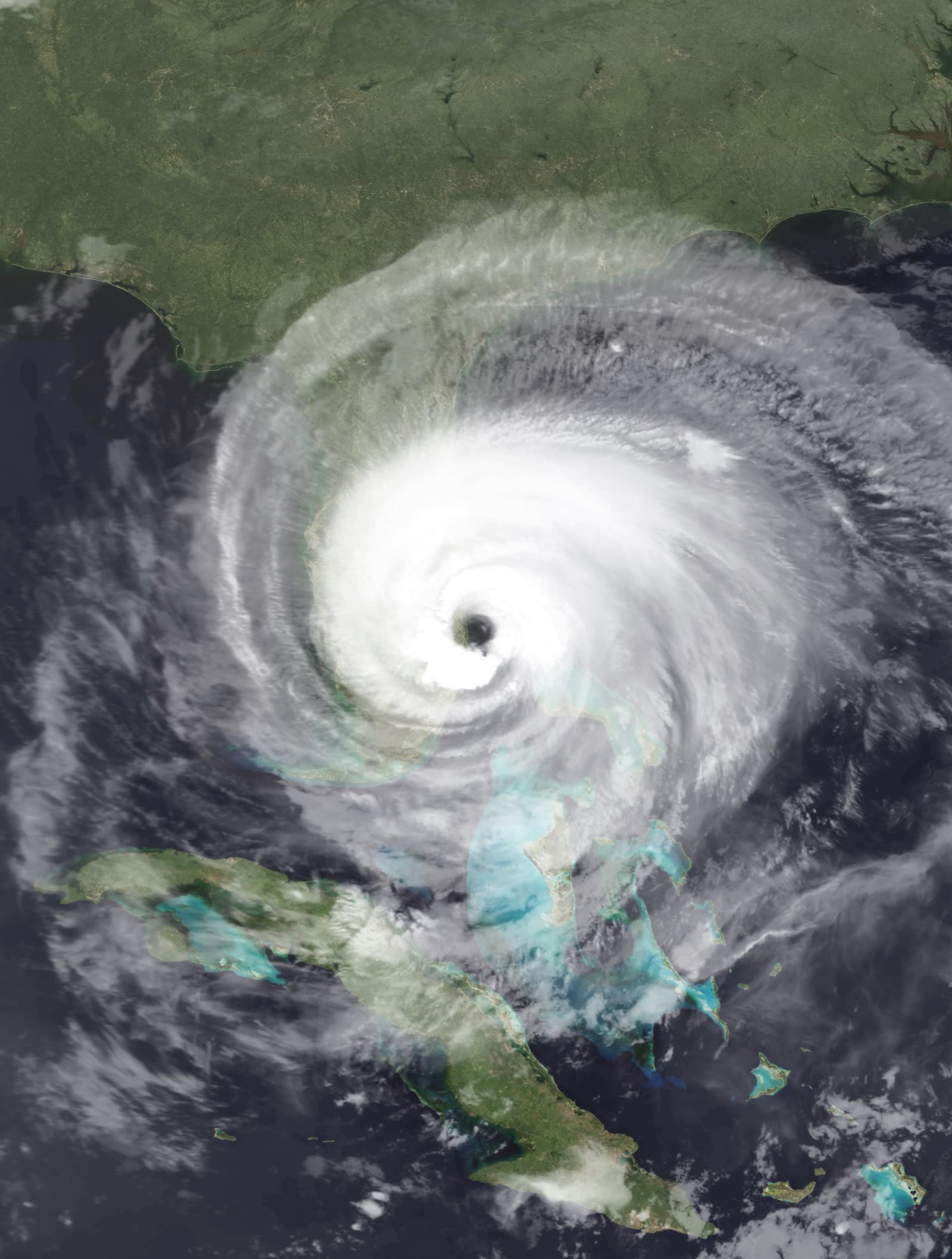
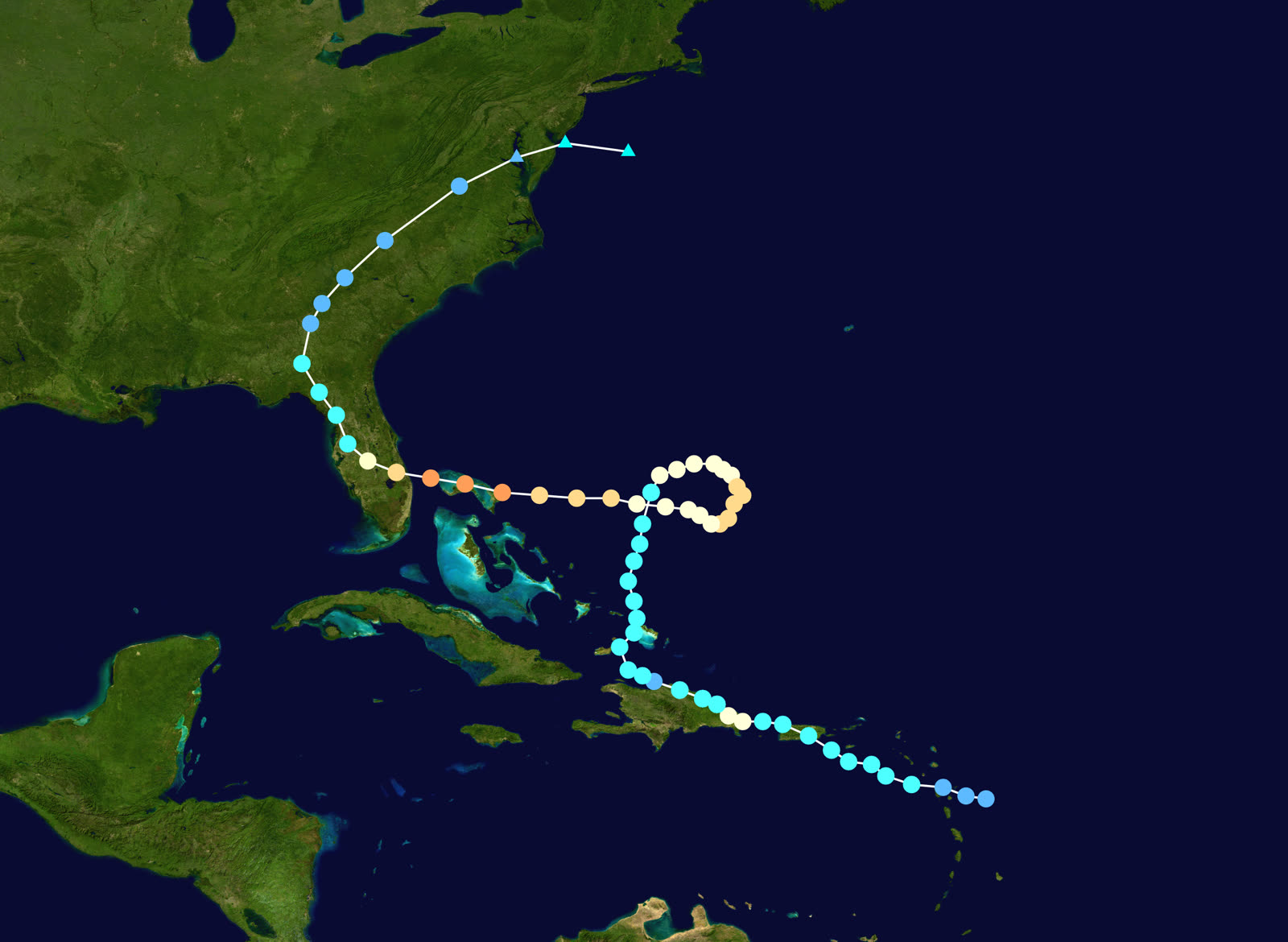
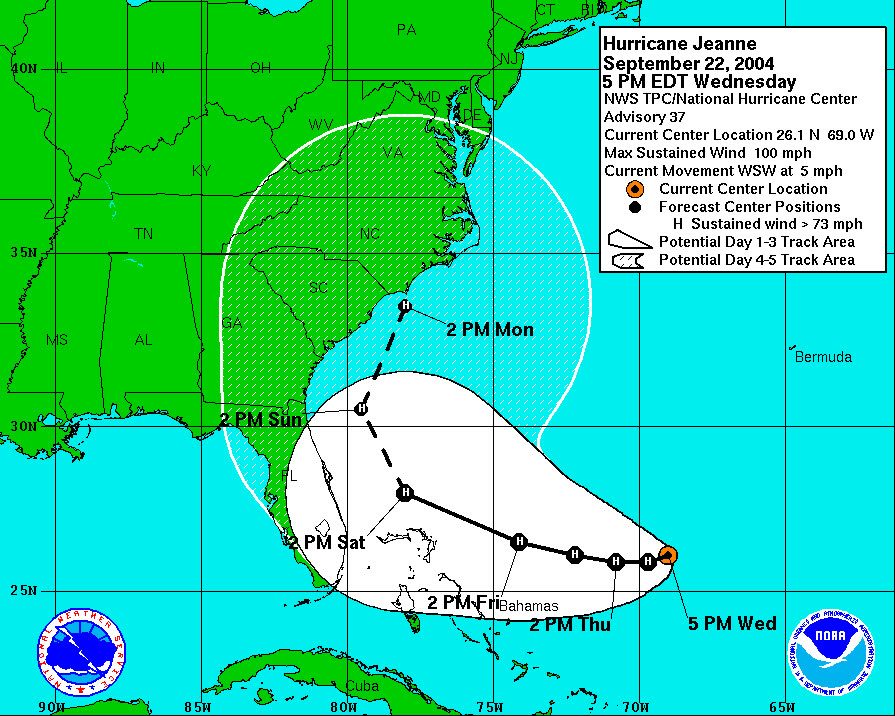
Jeanne killed more than 3,000 people in Haiti as a mere tropical storm, its rains drowning the city of Gonaïves in mud. Then it appeared to leave, drifting into the open Atlantic, where forecasts initially carried it out to sea. Instead, Jeanne executed a large clockwise loop, crossed its own track on September 23, and came back west, strengthening to Category 3 as it crossed Abaco and Grand Bahama.
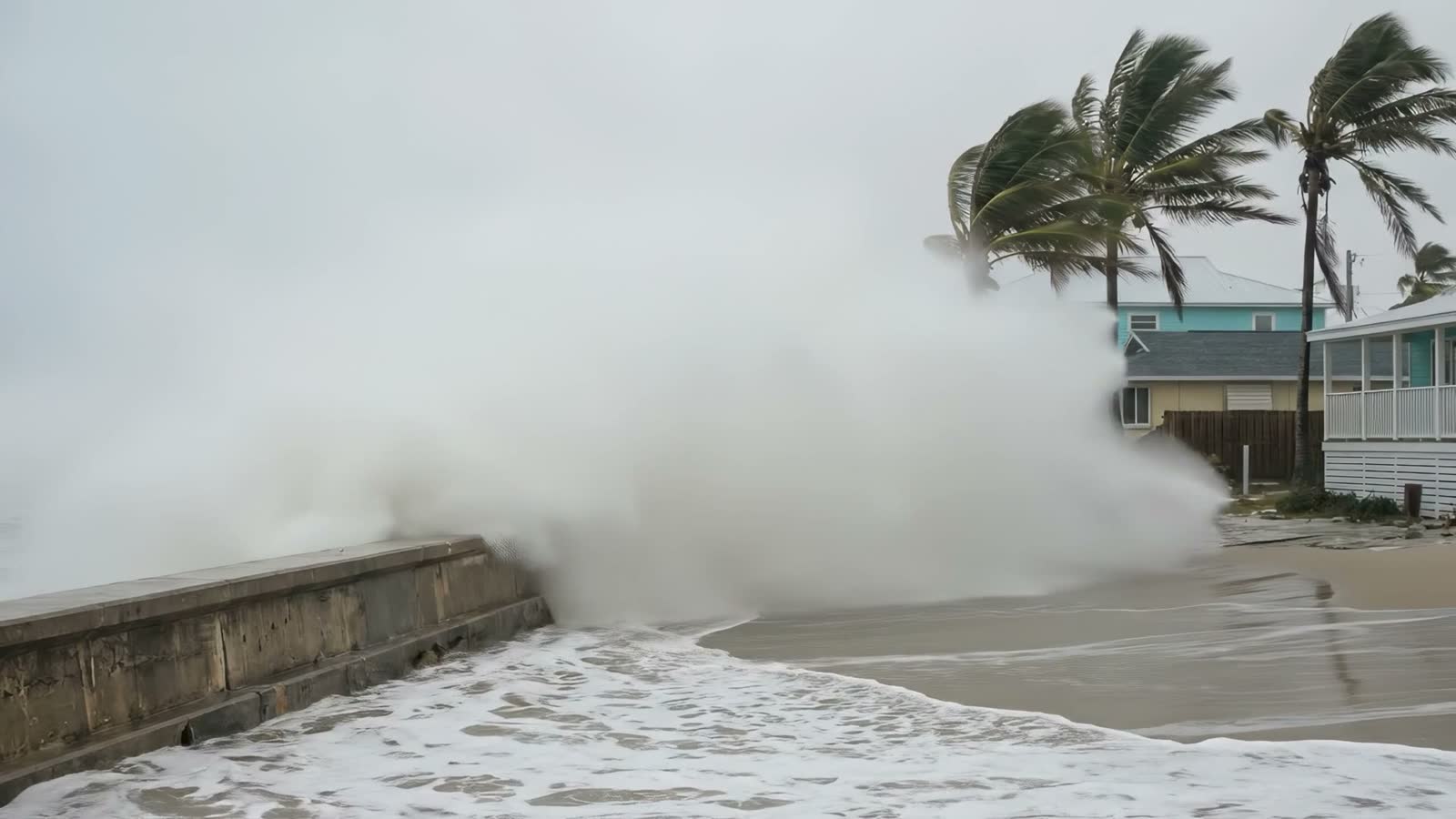
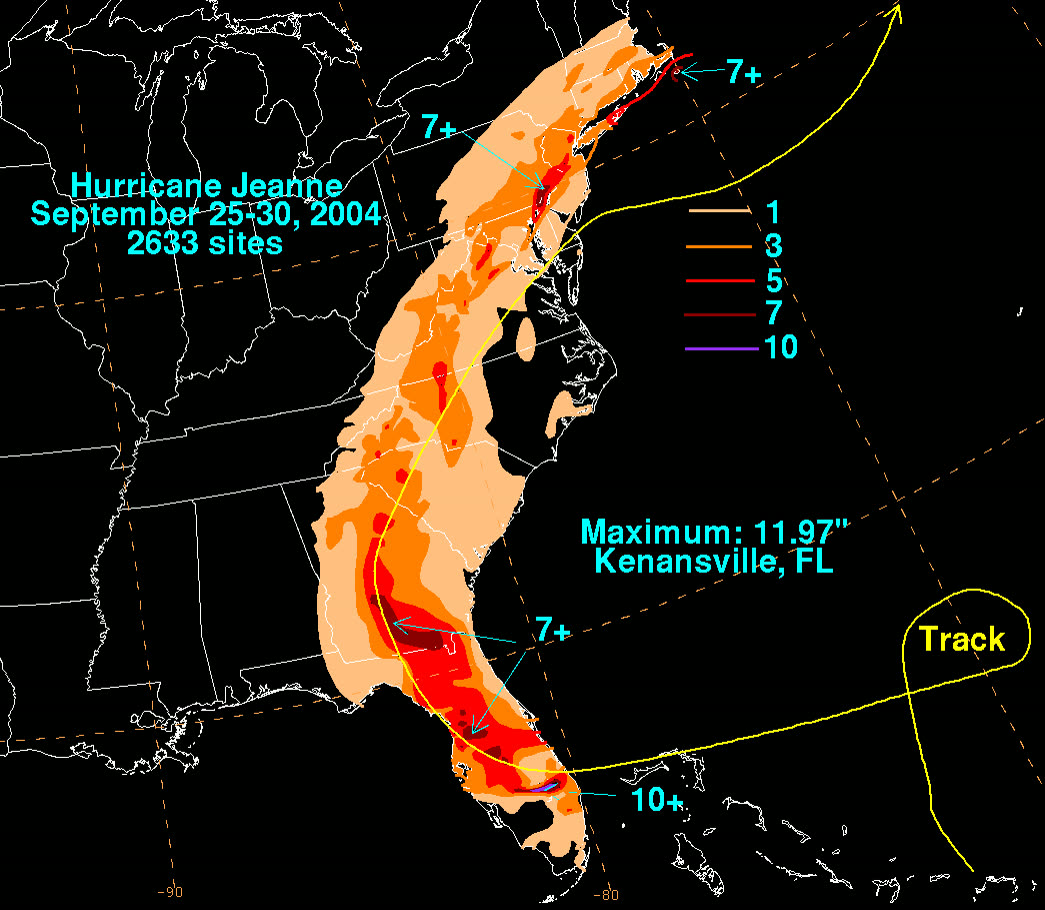
Landfall came at 0400 UTC on September 26, 2004: 120 mph and 950 mb, with the center of a 50-nautical-mile-wide eye crossing the southern end of Hutchinson Island just east of Stuart, for practical purposes the same landfall point as Frances, 21 days earlier. Surge reached 3.8 feet at Port Canaveral's Trident Pier, with up to 6 feet from Melbourne south to Ft. Pierce. Rainfall topped out at 11.97 inches at Kenansville on ground already saturated by three prior storms. Jeanne was Florida's fourth hurricane in six weeks, the first four-hurricane state season since Texas in 1886. Five direct US deaths; about $7.5 billion in US damage.
The damage
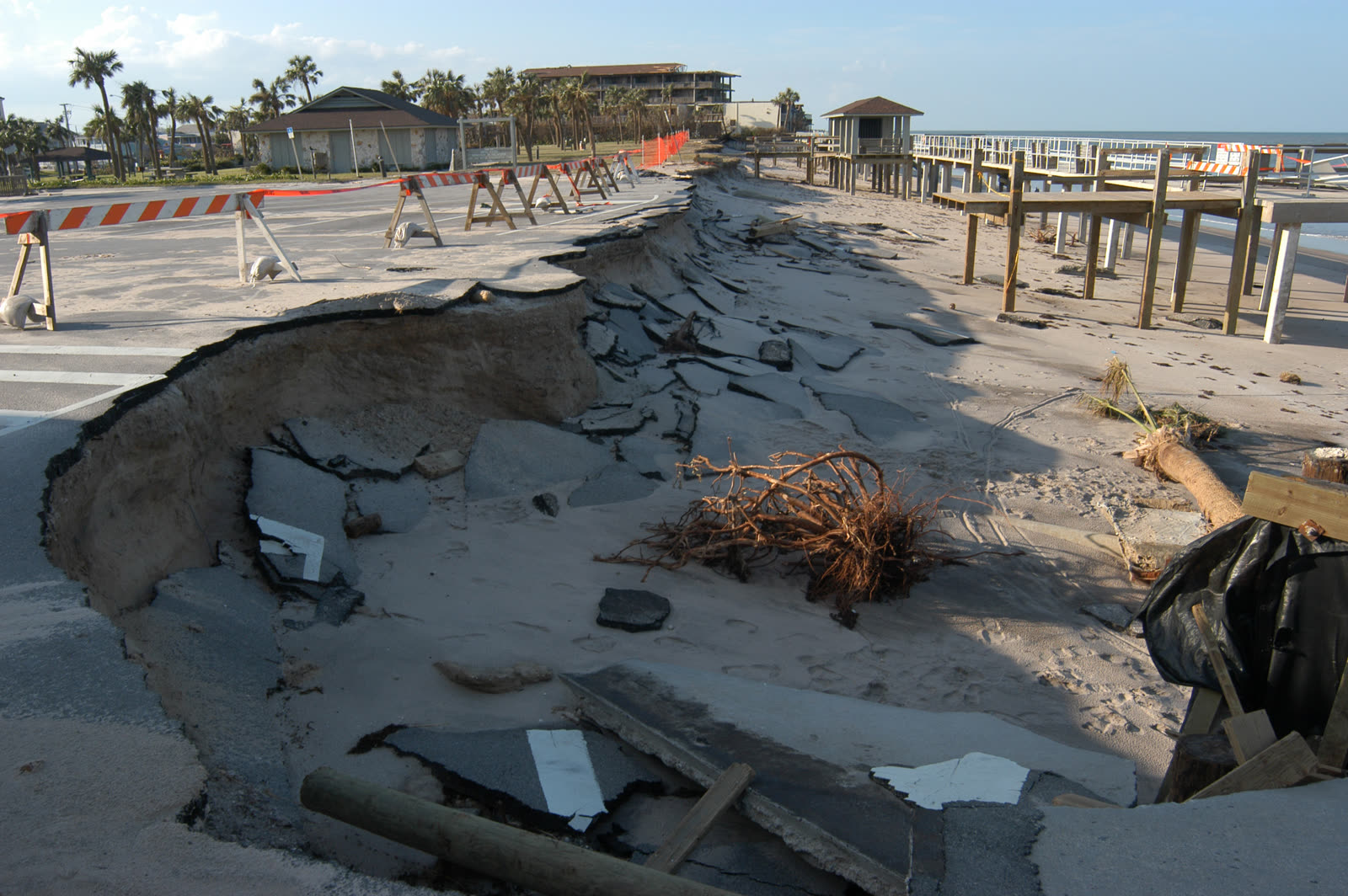
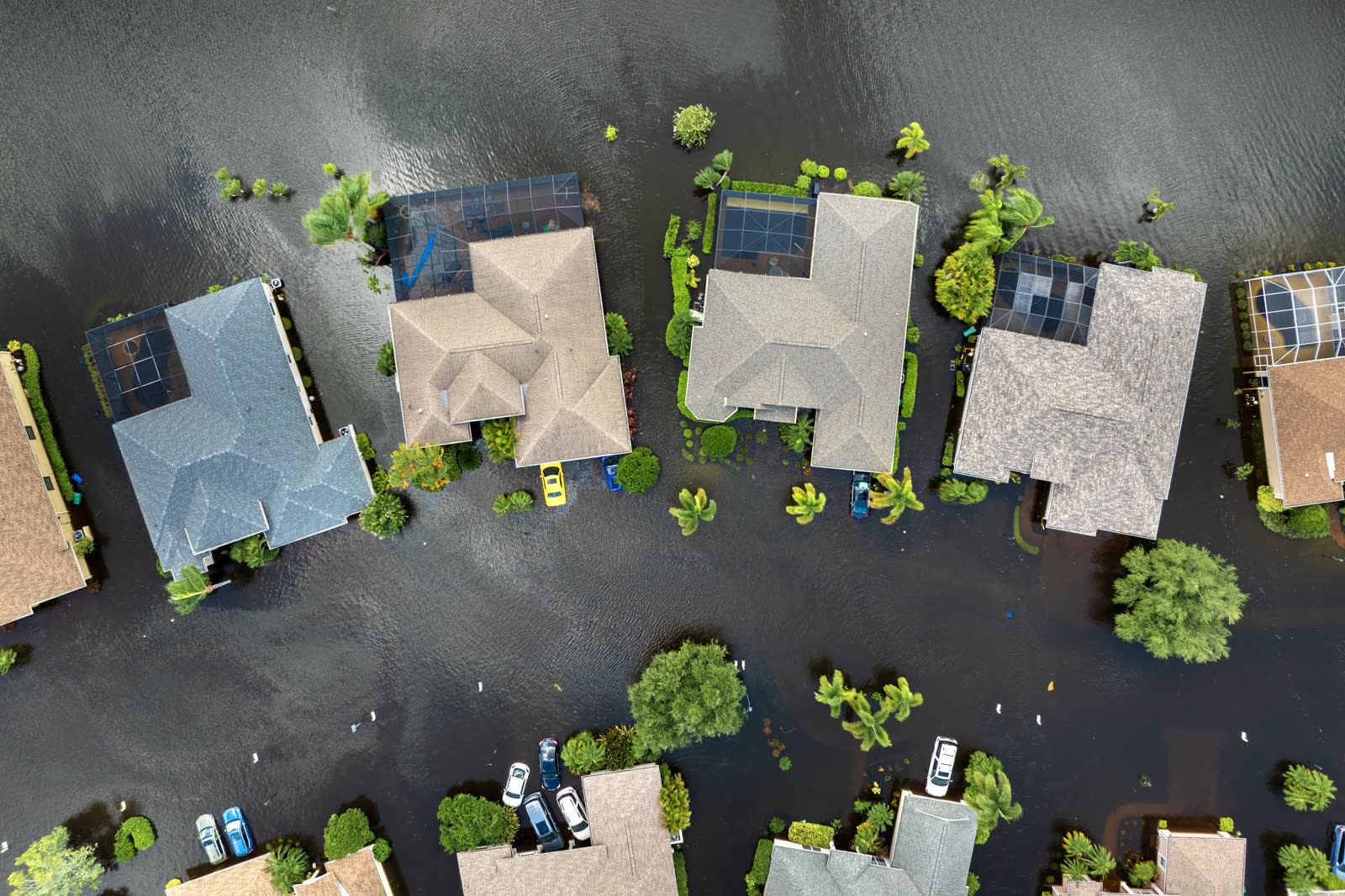
Jeanne's footprint was Frances's footprint, hit harder. Roofs opened by Frances and covered in blue tarps were stripped again; structures weakened in early September failed outright in late September. Beach erosion at Vero Beach and along the Treasure Coast compounded, dunes and seawalls that had absorbed Frances had nothing left for Jeanne. Wind damage spread across the same Central Florida counties Charley and Frances had crossed, and tornadoes followed the storm into the Carolinas, killing one man in Fairfield County, South Carolina.
The insurance aftermath
Insured US losses were $3.44 billion, but Jeanne's real legacy was the allocation problem. Hundreds of thousands of properties had open, unresolved Frances claims when Jeanne hit. Every one of those files became a comparative-causation exercise: which storm broke the roof, which storm soaked the interior, how much erosion belonged to each event. The answer determined whose deductible applied and whether a carrier could attribute damage to an earlier, under-documented event.
The stacking was brutal. A Stuart-area home could owe hurricane deductibles for Frances and Jeanne, each 2 to 5 percent of dwelling coverage, before either claim paid. Jeanne pushed the 2004 multi-deductible problem past the political breaking point: the December 2004 special session created a state reimbursement program (chapter 2004-480) for second and subsequent 2004 deductibles, and the 2005 Legislature converted Florida to a single calendar-year hurricane deductible going forward. The full legislative arc is in the Frances dossier.
Jeanne also fed the season's cumulative market damage: roughly 2.2 million claims and $21 billion insured across the four storms, a Citizens Property Insurance deficit assessed against policyholders statewide, and carrier balance sheets weak enough that the 2005 season, Dennis, Katrina, Wilma, tipped several Florida insurers, including the Poe Financial Group companies, into insolvency and triggered the 2006-07 reform wave.
What policyholders learned
- Between-storm documentation decided claims. Owners with dated photos of Frances damage, and of temporary repairs, could prove what Jeanne added. Without them, carriers allocated damage to whichever file was cheaper to close.
- Report every storm separately, fast. Waiting to file "one claim for the season" gave carriers grounds to dispute dates of loss; separate, prompt notices for Frances and Jeanne protected both claims.
- Tarp failures were still covered. Damage through a properly tarped opening was generally compensable as storm damage; carriers that blamed "inadequate temporary repairs" typically retreated when owners produced receipts and photos of mitigation efforts.
- Mitigation is a policy duty with a paper trail. The tarps, plywood, and water extraction after Frances weren't optional, and their costs were reimbursable. Owners who kept receipts recovered them.
- Deductible reimbursement required applying. The 2004 program paid only policyholders who applied to DFS by March 1, 2005, with proof of multiple applied deductibles, a reminder that relief programs reward the documented.
Not legal advice; consult an attorney about your specific claim. Damage figures are nominal (not inflation-adjusted) unless noted.