
This is the denial letter itself. Not a summary, not a quotation of one: the document the insurance company sent, filed as an exhibit to a lawsuit and therefore public. It survives because the policyholders sued and their attorney attached it to the complaint.
Sent on January 30, 2025 from Liberty Mutual Fire Insurance Company, P.O. Box 5014, Scranton, PA 18505-5014. Every quote and figure below is read off that document. The street address, policy number and claim number are removed; the party names are the public case caption.
| Who wrote it | Liberty Mutual Fire Insurance Company |
|---|---|
| Who signed it | John Tucker, Claims Department, Liberty Mutual |
| Who received it | Robert and Jamie Andersen, the named plaintiffs in the public case caption |
| Who was on the policyholder side | Lifeline Public Adjusters of Orlando prepared the estimate; the policyholders later retained counsel and sued |
| What it is | A partial coverage denial. Liberty Mutual accepted the ensuing water damage to the kitchen and living-area ceiling and refused the roof system entirely. |
| What the carrier calls the form | 1PDEN First Party Partial Coverage Denial |
| Where | Winter Garden, Orange County, Florida |
| When the loss happened | October 9, 2024, the date Hurricane Milton crossed central Florida |
| When the letter was sent | January 30, 2025, 113 days after the date of loss |
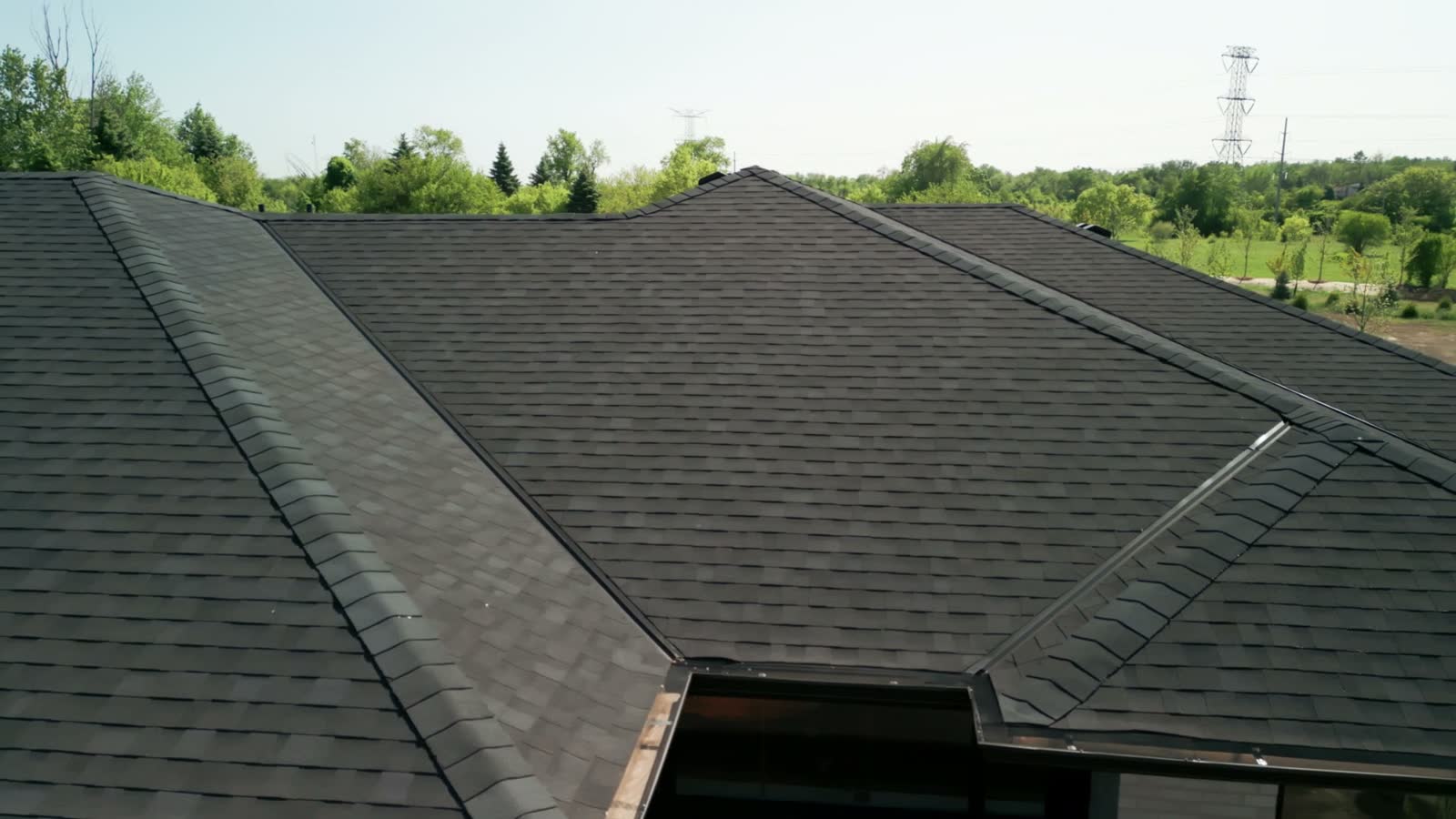
| Why, in the letter’s own reasoning | The letter states the roof tiles were not damaged by Milton, and attributes them instead to gravity slippage, age, construction deficiency and foot traffic. The ceiling stains are attributed to a non-storm-related breach in the roofing underlayment. |
| Dwelling coverage on the policy (Coverage A) | $497,100 |
|---|---|
| Annual premium | $4,123.00 |
| Hurricane deductible, 2% of Coverage A | $9,981.77 as stated in the letter; the declarations page states $9,942 |
| All-other-perils deductible | $2,500 |
| Policyholder's estimate to repair (Exhibit A, public adjuster) | $193,623.26 replacement cost value |
| Liberty Mutual's valuation of the covered loss | $2,687.03 |
| Amount actually paid | $0. The covered figure sits below the hurricane deductible, so the letter records a negative balance of $7,294.74 |
This section is our reading of the document above, not the letter's words.
What it does for the insurance company
Every sentence in the coverage position does one job: move the roof out of the storm and into the policy's exclusions. Gravity, age, construction deficiency and foot traffic are not perils, they are conditions, and conditions are excluded. Once the roof is out, the only thing left to price is a ceiling stain, and a ceiling stain cannot clear a $9,981.77 hurricane deductible. The letter never has to argue the damage is not there, and it never has to say no. It says partial, and the arithmetic says zero.
What it means for the homeowner
A homeowner with $497,100 of dwelling coverage, who paid $4,123 for the year, filed a hurricane claim and received nothing. The letter is polite, detailed, and reads as though something was granted. The number that matters is not in the coverage position at all, it is in the payment table: $2,687.03 covered, $9,981.77 deductible, a negative balance. The gap between the two sides is not close. The public adjuster priced the repair at $193,623.26; Liberty Mutual priced the covered part at 1.4 percent of that.
- 1 The dispute is causation, not coverage. Nobody argues a hurricane happened or that the roof is damaged. The fight is whether Milton did it, and that is decided by expert evidence on both sides, not by argument.
- 2 A partial denial that pays nothing is still a denial. Read the payment table before the prose: covered amount, deductible, net. If the net is zero, treat the letter as a full denial for every practical purpose.
- 3 Four separate exclusions are stacked here, and each has to be beaten on its own facts. Ask which specific observation supports each one, and ask for the inspection report and photographs behind it.
- 4 The letter cites the seepage exclusion, which requires leakage over 14 days or more. That is a factual claim about duration, and it is testable against when the storm hit and when the stains appeared.
- 5 Liberty Mutual's internal appeal runs 10 business days and, by its own terms, does not extend any suit limitation. Using it does not pause your deadlines.
The letter closes with paragraphs addressed to other states: an appeal address for the NJ Claims Internal Appeals Committee in Boston, and a paragraph beginning 'Pursuant to New York Regulation 65-3.5(o)' about medical services. This is a Florida homeowners claim on a Florida property. Standard-form boilerplate travelling with the template is ordinary, but it is a fair measure of how much of this document was assembled rather than written for this house.
Andersen v. Liberty Mutual Fire Ins. Co., No. 6:25-cv-01479-JSS-NWH (M.D. Fla.), Doc. 1-1, Exhibit C at 106 to 108 of 314. Removed from Fla. 9th Jud. Cir. (Orange County), filing no. 226519797. Read the filed document ↗
A complaint states one side's allegations and the case is pending; nothing here has been decided by a court. Not legal advice; consult an attorney about your specific claim.
This is the only entry in the archive where we hold the denial letter itself as a document rather than a quotation of one. It survives because the policyholders sued and their attorney attached it to the complaint, which put all three pieces of the dispute on the public docket at once: the estimate, the policy, and the letter.
IN THE RECORD
- Storm dossier Hurricane Milton
Andersen v. Liberty Mutual Fire Ins. Co., No. 6:25-cv-01479-JSS-NWH (M.D. Fla.), Doc. 1-1, Exhibit C at 106 to 108 of 314. Removed from Fla. 9th Jud. Cir. (Orange County), filing no. 226519797. · public record ↗
Quotes are verbatim from the cited public record, checked word for word before publication. Case status and statute summaries are as of August 2026; check the current docket and statute. Not legal advice; consult an attorney about your specific claim.
Got a letter like this one?
Upload it. You'll get a straight answer on which argument the carrier is running, how the same argument has fared on the record, and what the strongest next move is.
The library grows one letter at a time. Letters shared with permission are published redacted, with the policyholder's details removed.